
Choosing the right glass kitchen storage containers is about more than appearance. A clear jar of lentils on a pantry shelf, a sealed bowl of leftovers, and a stackable lunch container all solve different problems. The best choice depends on what you store, how often you use it, and where it needs to fit. Small details matter.
Scott DeFife, president of the Glass Packaging Institute, is associated with the industry’s description of glass as “infinitely recyclable.” That speaks to one material advantage, but it does not make every container equally practical. Lids, seals, shape, weight, and care instructions deserve a close look. Glass can chip or break, and not every container is designed for ovens, freezers, or sudden temperature changes. Check the manufacturer’s guidance.
This guide compares the main types, from airtight pantry canisters to meal-prep sets, refrigerator bowls, and jars for dry goods. It will look at what each style stores well, how its lid performs, and whether its shape saves shelf space. A square container may fit neatly beside another; a wide bowl may be easier to clean but awkward to stack. There is no perfect set for every kitchen. A few useful pieces often beat a cupboard full of mismatched ones.
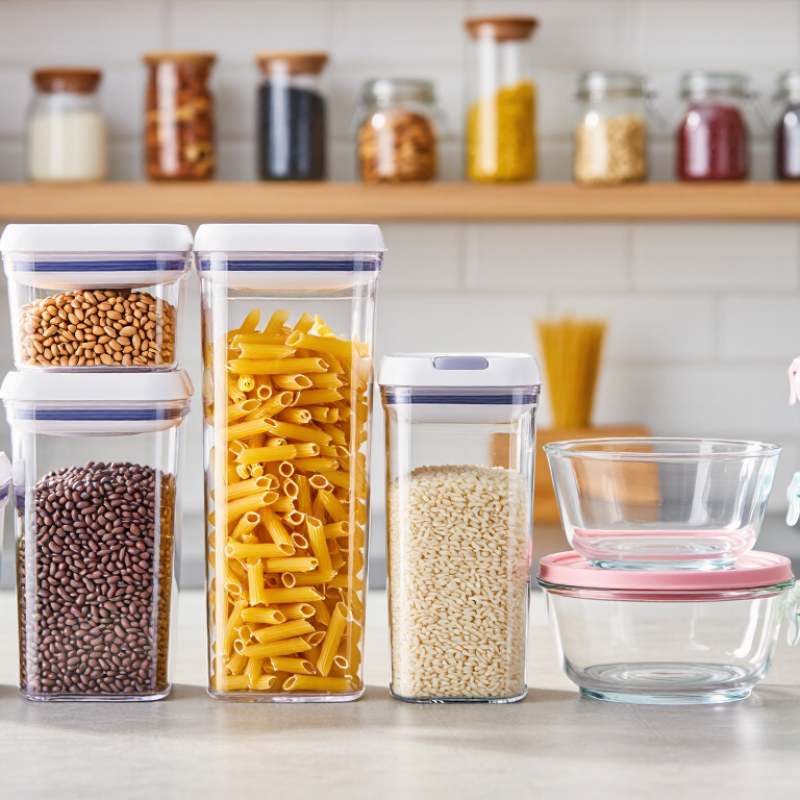
Glass kitchen storage containers are best classified by glass composition, shape, lid system, and intended temperature use. Soda-lime glass is common and usually heavier. Borosilicate glass handles temperature changes better, but “better” does not mean immune to thermal shock. Tempered glass is another category; check the product instructions before using it in an oven or microwave.
Shape affects everyday use. Rectangular containers stack neatly and fit shelves, while round jars suit grains, spices, and leftovers with sauces. Lids may be plastic, glass, or silicone-sealed; the seal matters more than appearance when storing soup. FEVE’s 2022 data report estimated an 80.1% glass packaging recycling rate across Europe. That figure covers packaging overall, not kitchen containers specifically, but it shows why material and end-of-life labels matter. Classification is useful, though labels can be easy to overread.
Tips: Match the container to the task. Use a wide opening for scooping oats, and a tight seal for chopped herbs. Check temperature guidance and lid compatibility before heating. Small details matter.
Everyday glass containers with airtight lids make leftovers easier to see, stack, and use before they disappear behind newer groceries. A clear container can show yesterday’s lentils, sliced fruit, or half a portion of rice at a glance. Glass also resists lingering food odors better than many porous materials, though it can feel heavy when packed for lunch. Choose a few sizes that fit your usual meals rather than buying a large matching set. A small container suits sauces; a wider, shallow one cools leftovers more evenly in the refrigerator.
A dependable lid should close evenly around the rim, with no visible gaps or loose corners. Check that its seal is removable or easy to clean, since crumbs and sauce can collect around the edges. Still, “airtight” does not mean food stays fresh indefinitely. Refrigerate perishables promptly, and use clean utensils when serving.
That matters.
Glass handles temperature changes differently depending on its construction, so follow the maker’s care guidance and avoid moving a very cold dish straight into a hot oven. The system is not flawless: lids can go missing, and glass can chip if knocked against a sink. Keeping a small, practical collection often works better than storing more containers than your shelves can comfortably hold.
Glass jars and canisters make pantry staples easy to see and portion. They suit flour, oats, rice, beans, pasta, nuts, and tea, especially when containers have wide mouths for scooping. Choose sizes that match how quickly your household uses each ingredient. A half-empty jar looks tidy, but it can leave more air around foods that lose freshness over time. Airtight lids help limit moisture and pests; they do not make food last indefinitely. Keep containers dry, label contents and dates, and use older supplies first. Small details matter.
The USDA Economic Research Service estimated that about 31% of the U.S. food supply was lost at retail and consumer levels in 2010. That figure does not show that jars alone prevent waste, but visible contents and clear date labels can support better pantry rotation. For light-sensitive ingredients, such as some oils or spices, clear glass may be a poor fit; store jars in a dark cabinet. Glass is also heavy and can break, so avoid placing large canisters on high shelves. I still find matching jars tempting, but practical sizes often work better than a perfect-looking set.
Glass meal-prep containers suit refrigerated foods because their nonporous surfaces resist lingering odors and stains. A tight-fitting lid helps limit spills and keeps cut fruit, cooked grains, and leftovers covered. Clear sides make it easier to spot what needs eating. Small detail, big help.
Choose shallow containers for soups, roasted vegetables, or cooked pasta. Food cools more evenly in a shallow layer, and portions are easier to reach without digging. Refrigerate perishable food within two hours, or within one hour in temperatures above 90°F. Don’t leave a full pot on the counter while you organize the kitchen. I used to do that. Not ideal.
Leave a little room at the top for foods that may expand, and label containers with the preparation date. Glass can be heavy, and lids may not be oven-safe, even when the dish is. Check the container’s care instructions before reheating, and avoid sudden temperature changes that can crack glass. Let a chilled dish warm slightly before placing it in a hot oven, if its instructions allow oven use. It’s one more step, but guessing is worse.
Oven-safe glass containers move easily from meal preparation to the refrigerator, but “glass” alone does not mean oven-safe. Check the container’s stated temperature limit and use instructions before heating. Thermal shock can occur when glass faces a sudden temperature change, so avoid moving a cold dish straight into a hot oven. Set it on a dry, room-temperature surface after cooking. Small habits matter.
Glass makes food easy to see, and its nonporous surface is simple to wash. For practical oven use, choose a container with sturdy handles and enough space for food to expand or bubble. Keep plastic lids out of the oven unless their instructions specifically allow it. Do not use a chipped dish. I’d still inspect the rim each time; small damage is easy to miss.
Storage guidance matters, too. USDA FSIS advises reheating leftovers to 165°F (74°C), and its food-safety guidance recommends using refrigerated leftovers within three to four days. These are useful benchmarks, not a substitute for safe cooling and refrigeration. Let hot food cool appropriately before storing it, and avoid sealing a steaming dish immediately. A little patience helps.
Glass resists lingering odors and stains. Clear sides make fruit, grains, and leftovers easy to spot. Small detail, big help.
Refrigerate it within two hours, or within one hour when temperatures exceed 90°F. Don’t leave a full pot on the counter while organizing.
A shallow layer cools more evenly and makes food easier to reach. It works well for cooked pasta, roasted vegetables, or soup.
No. Check its stated temperature limit and care instructions first. “Glass” alone doesn’t confirm oven safety.
Avoid sudden temperature changes, such as moving a chilled dish straight into a hot oven. Use the oven only if instructions allow it. I still check twice.
Only if its instructions specifically allow oven use. Otherwise, keep the lid out. Easy to overlook.
Leave room at the top if food may expand, and label each container with its preparation date. Avoid sealing a steaming dish immediately.
USDA FSIS recommends using refrigerated leftovers within three to four days and reheating them to 165°F (74°C). Safe cooling matters, too.
Glass kitchen storage containers come in several types, each suited to a different task. Everyday containers with airtight lids help keep leftovers and frequently used ingredients fresh, while pantry jars and canisters make dry goods easy to see, organize, and access. Choosing a shape and size that fits your shelves can make everyday storage more convenient.
For refrigerated foods, glass meal-prep containers offer a practical way to portion meals and keep ingredients organized. Oven-safe options add flexibility, letting you cook and store food in the same container when its care instructions allow. Across these categories, consider lid fit, capacity, ease of cleaning, and intended use. Understanding how glass kitchen storage containers are classified makes it easier to select the right pieces for pantry storage, meal preparation, and everyday cooking.
