
Large glass soup storage containers help restaurants, meal-prep companies, and retailers store portions while keeping contents visible. For wholesale buyers, the right choice is not simply the largest jar or the lowest unit price. Capacity, lid fit, glass thickness, stackability, and case-pack quantities all affect daily handling and storage costs. Small details matter.
This guide introduces ten options and the practical differences buyers should compare before requesting samples or quotes. A wide-mouth design can make filling and cleaning easier, while a secure, compatible lid helps reduce spills during routine transport. Buyers should confirm product dimensions, usable volume, packaging, and care instructions directly with the supplier. Specifications vary.
A low price may look attractive on a spreadsheet, yet breakage rates, freight, and inconsistent quality can change the real cost. We cannot judge every supplier from a product photo alone. Requesting a sample and checking its finish, seal, and handling feel is a sensible step, even when it slows a purchase. The containers also need to match the buyer’s actual use, from chilled soups to pantry storage; not every glass product suits every workflow. The selections ahead are intended as a starting point, not a substitute for testing. Compare the details carefully, then choose large glass soup storage containers that fit your volume needs, storage space, and quality expectations. They should work in practice.
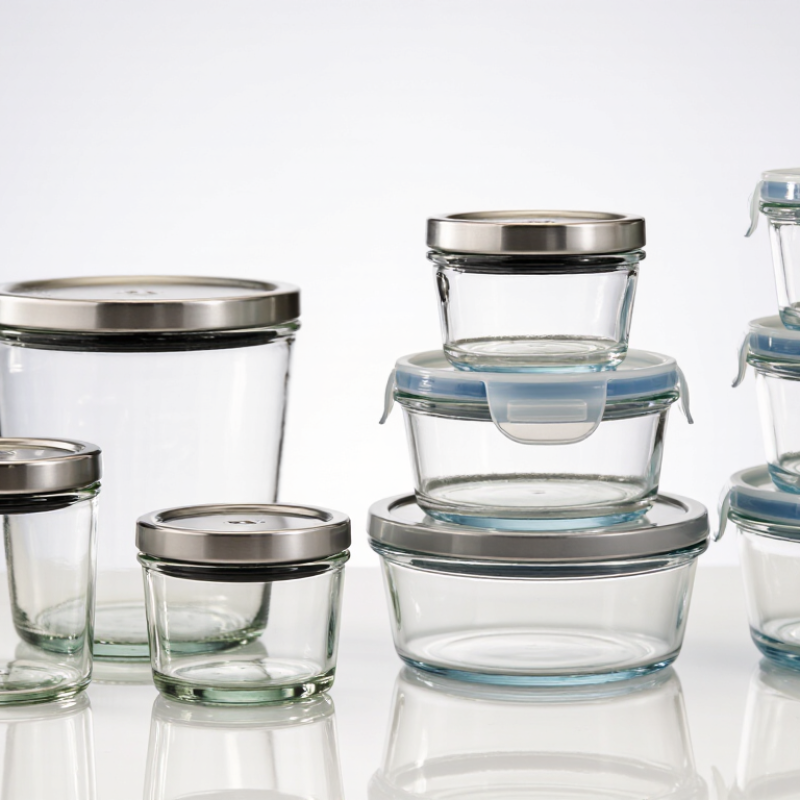
A large glass soup storage container is defined by useful capacity, not one universal measurement. For many kitchens, it holds several servings, often around one to two liters or more. The wide opening makes it easier to ladle thick soup and reach the bottom when washing. Straight sides also help containers stack neatly in a refrigerator. Glass lets you see the broth, vegetables, and fill level at a glance. One easy mistake is choosing the biggest size available. A half-empty container can take up more shelf space than expected.
Tips: Leave room at the top when storing soup, especially if it may expand as it freezes. Let hot soup cool before transferring it, and check the container maker’s instructions before using it in a freezer or microwave. Not every lid is suitable for heating.
For wholesale buyers, “large” should also mean consistent capacity across the order. Check usable volume, external dimensions, wall thickness, lid fit, and whether the container is easy to handle when full. A sturdy base can help on busy prep counters, though heavier glass may be less convenient for staff to carry. Request a sample and test it with a dense soup, not just water. It is a small check, but it can reveal awkward pouring or a lid that does not seal reliably.
| Top 10 Large Glass Soup Storage Containers for Wholesale - What Defines a Large Glass Soup Storage Container | |||||
|---|---|---|---|---|---|
| Container Format | Nominal Capacity | Typical Approx. Dimensions | Common Glass Material | Typical Lid Style | Wholesale Use Considerations |
| Wide-mouth round jar | 1.0 L | Approx. 12 cm diameter × 13 cm high | Soda-lime glass | Screw-on or clip-top lid | A practical large single-serving or side-soup size; confirm lid seal and food-contact documentation. |
| Tall cylindrical jar | 1.2 L | Approx. 11 cm diameter × 16 cm high | Soda-lime glass or borosilicate glass | Flat screw lid | Narrower footprint can help with shelf organization; check usable opening width for filling and cleaning. |
| Rectangular food-storage dish | 1.5 L | Approx. 21 × 15 × 8 cm | Tempered soda-lime glass or borosilicate glass | Snap-lock plastic lid with gasket | Broad shape is convenient for portioning; verify whether the lid is leak-resistant rather than fully leakproof. |
| Large round canister | 1.5 L | Approx. 14 cm diameter × 13 cm high | Soda-lime glass | Glass or screw-on lid with gasket | Wide opening suits chunky soups; assess packed-carton dimensions and protective packaging for transit. |
| Deep rectangular casserole-style container | 1.8 L | Approx. 24 × 17 × 9 cm | Tempered soda-lime glass or borosilicate glass | Clip-lock plastic lid with silicone gasket | Useful for family portions; clarify whether the glass is oven-safe and whether the lid must be removed during heating. |
| Large-mouth storage jar | 2.0 L | Approx. 15 cm diameter × 16 cm high | Soda-lime glass | Wide-mouth screw lid | Suitable for batch storage; request fill-volume and brimful-capacity details to avoid confusing the two measurements. |
| Low-profile rectangular dish | 2.0 L | Approx. 27 × 19 × 7 cm | Tempered soda-lime glass or borosilicate glass | Snap-lock lid with gasket | Stacks efficiently when lid design allows; check stacking stability and lid fit across production batches. |
| Family-size round container | 2.2 L | Approx. 17 cm diameter × 15 cm high | Soda-lime glass or borosilicate glass | Plastic lid with snap tabs | Large capacity suits multi-portion storage; compare gross weight and carton drop-test requirements. |
| Deep square storage container | 2.5 L | Approx. 20 × 20 × 10 cm | Tempered soda-lime glass or borosilicate glass | Four-sided locking lid with gasket | A high-capacity option for batch cooking; confirm maximum fill line, lid compression, and shipping protection. |
| Extra-large rectangular casserole container | 3.0 L | Approx. 30 × 21 × 9 cm | Tempered soda-lime glass or borosilicate glass | Fitted plastic lid with gasket or locking tabs | Suited to bulk or family-size storage; review pallet efficiency, breakage controls, and handling weight before ordering. |
| A large glass soup storage container is generally a reusable food-storage vessel with a capacity of about 1 L or more. Dimensions are approximate examples for common container formats and vary by design. Confirm actual capacity, dimensions, glass composition, thermal-use instructions, lid performance, and applicable food-contact requirements with the supplier. | |||||
“Large” depends on useful capacity, not one fixed size. Many kitchen containers hold one to two liters or more. Check the portions you serve.
A wide opening makes ladling thick soup easier. Straight sides can stack neatly in a refrigerator. You can also see the broth and fill level.
Leave room at the top because soup may expand. Let hot soup cool before transferring it. Check the container and lid instructions first.
Compare usable capacity, outside dimensions, empty weight, and wall thickness. Measure cartons and pallets too. A full container can be awkward to carry.
Look for a replaceable gasket and written leak-test results. Open and close a sample repeatedly. Soup finds weak seals quickly.
It generally handles sharper temperature changes better than ordinary soda-lime glass. Still, ask for supplier test data and follow the handling guidance. No material is a magic fix.
Fill a sample with dense soup, check pouring, and test the lid. Try stacking it on your actual shelf. Small trial, fewer surprises.
Include shipping, protective packaging, breakage risk, and replacement-lid costs. Ask about carton quantities, lead times, and replacement terms in writing. The cheapest quote may not stay cheapest.
This guide explains what makes a glass soup container suitable for large-volume storage, including its capacity, shape, lid fit, and ability to handle everyday kitchen use. It also outlines the key features wholesale buyers should compare, such as glass thickness, leak resistance, ease of cleaning, stackability, and compatibility with storage and reheating needs. A top-ten comparison helps businesses assess different container styles and identify options that fit their customers and operations.
The article also covers practical wholesale considerations, including unit pricing, order quantities, protective packaging, shipping, and supplier communication. By weighing these factors alongside quality, durability, and intended use, buyers can choose large glass soup storage containers that offer dependable performance and good value. The final selection should reflect the business’s storage requirements, budget, and customer expectations.
