
China Top Glass Storage Containers Manufacturers for Buyers

Time:2026-11-07 Author:Sienna
0%

China has become an important sourcing base for glass food-storage products, with manufacturers offering varied shapes, capacities, lids, and decoration options. For buyers, the challenge is not simply finding a low quoted price. It is finding a supplier whose production quality, communication, and delivery plans fit the product and market.

This guide introduces China’s glass storage containers manufacturers and the factors buyers can use to compare them. Look closely at glass type, wall thickness, lid fit, heat-resistance claims, packaging protection, and available quality checks. Ask for samples that reflect the proposed production specification, not merely a polished showroom piece. Small details matter. A lid that loosens after repeated use, or a chipped rim inside a carton, can turn a promising order into a costly problem.

Supplier experience, factory capabilities, customization limits, minimum order quantities, and export support also deserve attention. Request clear specifications and written confirmation of approved samples. Where food-contact requirements apply, buyers should verify relevant documentation for their destination and product use with qualified parties. Do not assume every factory offers the same testing or controls. Some information may remain unclear until questions are asked—and that is worth acknowledging. A careful comparison cannot remove every risk, but it can reveal gaps before a purchase order is placed. The aim is practical: identify manufacturers that can deliver consistent glass storage containers, protect them in transit, and support a reliable long-term supply relationship. Depending on order size and design complexity, the best fit may not be the largest supplier. A modest factory can be capable, but buyers should verify that capability with evidence.
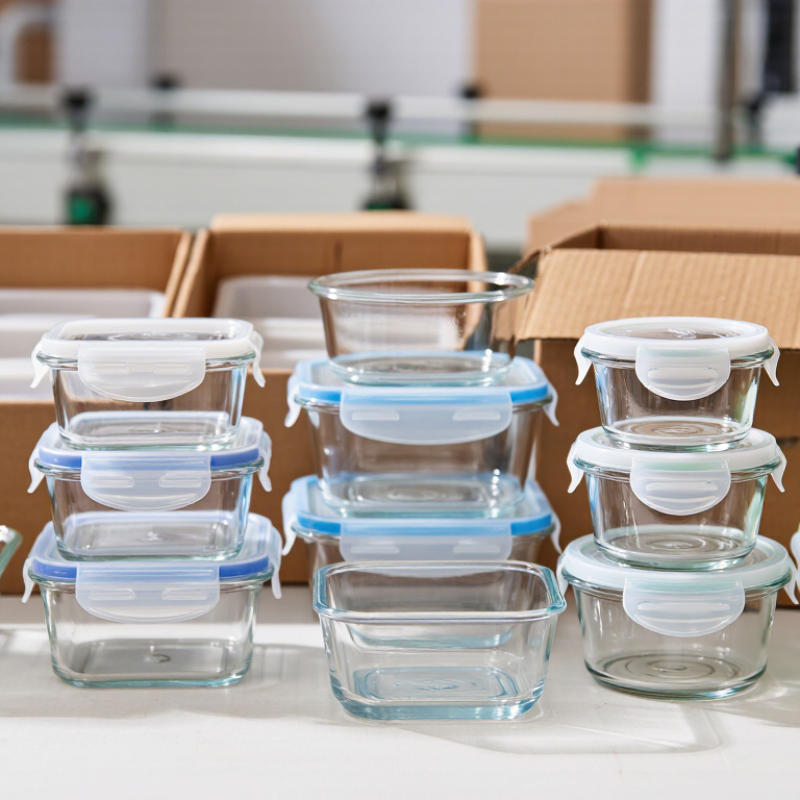
China Top Glass Storage Containers Manufacturers for Buyers

China’s Glass Storage Container Industry: Products and Manufacturing Overview

China’s glass storage container industry sits within a much larger packaging sector. Grand View Research estimated the global glass packaging market at USD 65.8 billion in 2023, with projected growth through 2030. This category includes bottles and jars, so it is not a direct measure of food-storage containers. That distinction matters.

Chinese manufacturers commonly produce containers from soda-lime glass, using forming lines, annealing lehrs, and inspection systems. Buyers can assess production quality through practical checks: lid fit, rim smoothness, wall consistency, and resistance to sudden temperature changes. Ask for test results and samples from the same production process. A polished sample alone proves little.

Manufacturing capability varies by factory and product specification. Some plants focus on high-volume, standard shapes; others handle smaller runs or custom molds. A weak point in public industry data is the limited separation of storage containers from broader glass packaging. Buyers should therefore verify capacity, inspection procedures, and packaging protection directly. Look closely at the details. A sturdy container can still arrive chipped if cartons and dividers are poorly designed.

China’s Glass Storage Container Industry: Common Product Capacities

Glass food storage containers are commonly offered in a range of nominal capacities, from small portions to larger meal-prep sizes. The capacities shown are representative product sizes, not market-share or production data; actual offerings vary by manufacturer and product line.

Key Features and Quality Standards of Glass Storage Containers

Glass storage containers should be judged by more than clear walls and a tight lid. Buyers can inspect rim smoothness, wall thickness, base stability, and whether lids seal evenly after repeated use. Small details matter. A container that rocks on a flat counter or has tiny bubbles near a seam deserves closer review. Grand View Research’s Glass Packaging Market report valued the global market at USD 71.6 billion in 2023, showing the scale of demand for glass packaging. Market growth, however, does not guarantee consistent product quality.

For food-contact safety, ask suppliers for test reports covering lead and cadmium release. ISO 7086-1:2016 sets requirements and test methods for these substances in glass hollowware. Also request thermal-shock and dishwasher-cycle results when containers are intended for everyday storage. Check the lid. It should close securely without forcing the glass rim, and seals should resist staining and odors. Sample inspection matters, but it cannot replace batch-level testing. A perfect lab result cannot prevent damage from a chipped edge or sudden temperature change, so handling guidance should be clear and realistic.

Leading Glass Storage Container Manufacturers in China

China has a broad base of glass storage container manufacturers serving household, retail, and food-service buyers. Their capabilities vary. Some factories focus on pressed glass bodies, while others supply lids, seals, and retail packaging. Buyers should check the full production scope, not rely on a catalog image.

Useful questions concern glass composition, wall thickness, capacity tolerance, and heat-resistance testing. Ask for a sample from a regular production run. Inspect the rim for chips, fit the lid, and check whether the seal sits evenly. Small defects matter. A container may look clear under showroom lights yet show bubbles or uneven edges in daylight. Request documented inspection criteria and clarify how defects are handled before shipment.

Manufacturers in China may offer custom shapes, colors, and packaging, but each change can affect tooling costs and lead times. Confirm minimum order quantities, sample charges, carton strength, and packing methods. If containers will face temperature changes, ask which tests support the stated use; do not assume every glass item is oven-safe. Communication can be imperfect. Drawings, approved samples, and written specifications help reduce misunderstandings, though they cannot replace regular quality checks. A careful factory review takes time.

How Buyers Can Evaluate and Compare Chinese Manufacturers

China Top Glass Storage Containers Manufacturers for Buyers

How Buyers Can Evaluate and Compare Chinese Manufacturers

China’s glass container suppliers differ in furnace capacity, forming methods, and quality controls. Compare factories using the same product brief: capacity, glass color, lid type, tolerances, and monthly volume. Grand View Research estimated the global glass packaging market at USD 65.09 billion in 2023, with projected annual growth of 4.2% from 2024 to 2030. This market estimate offers context, not proof of a supplier’s performance. Ask for recent inspection records and clarify whether reported defect rates include sorting and transit damage. Details matter.

Request samples from the production line, not only hand-selected showroom pieces. Check rim flatness, lid fit, wall thickness, and whether containers withstand repeated temperature changes. Ask the factory to explain its test method and share dated results. Verify quality-management certificates with the issuing body, and confirm they cover the actual manufacturing site. A polished audit report can still miss a weak packing process; I would inspect carton dividers and drop-test results too. No comparison is perfect.

Tips: Send every shortlisted supplier the same specification sheet. Compare unit price alongside mold fees, minimum order quantity, lead time, and breakage terms. Request a pilot order before committing to a large shipment. Keep one sample as a reference.

Sourcing, Customization, and Supplier Verification in China

China’s glass storage container suppliers can offer useful flexibility, but a product photo rarely tells the whole story. Buyers should define capacity, glass thickness, lid material, and sealing requirements before requesting quotations. A 700 ml container with a snap-fit lid may perform differently from one with a silicone gasket. Small details matter.

Ask suppliers for drawings, material specifications, and production samples. Check whether dimensions and tolerances match your packaging plans. For customized colors, shapes, or logos, confirm minimum order quantities and tooling charges in writing. Request a sample made with the intended production process, not a hand-finished display piece. It may take longer. But it can reveal uneven rims, loose lids, or scratches before a large order is placed.

Supplier verification should combine documents with direct checks. Review business details, production capacity, quality-control steps, and recent inspection records. A video call can show equipment, while an independent inspection can assess a finished batch against agreed criteria. Do not rely on one certificate or a polished showroom. Lead times can shift when molds, packaging, or raw materials change; even careful plans sometimes miss a detail. Keep specifications, approved samples, and corrective actions in a written record, then revisit them before repeat orders.

China Top Glass Storage Containers Manufacturers for Buyers - Sourcing, Customization, and Supplier Verification in China

Evaluation area What buyers should specify Supplier evidence to request Verification notes
Glass material State whether the product requires soda-lime glass or borosilicate glass, and identify the intended use and temperature conditions. Material specification, product drawings, and test reports for the offered product. Borosilicate glass generally has a lower coefficient of thermal expansion than soda-lime glass. Actual thermal-shock performance depends on the complete product design and testing.
Container format and capacity Define shape, nominal capacity, dimensions, wall or base requirements, lid style, and acceptable tolerances. Dimensioned drawings, capacity measurement method, and a pre-production sample. Specify whether capacity means brimful capacity or usable fill capacity; these measurements are not interchangeable.
Lid and seal system Identify lid material, gasket material, closure type, and the required performance for storage or transport. Component specifications, assembly details, and applicable leakage or closure test results. Do not assume a container is leakproof or airtight from appearance alone; define and test the required performance.
Customization List requested changes to shape, color, decoration, lid, packaging, labeling, or tooling. Written quotation showing tooling charges, sample charges, order minimums, production timeline, and ownership terms for custom tooling. Custom tooling, decoration, and packaging can affect cost and lead time. Confirm all terms in writing before approving samples.
Food-contact compliance Identify destination markets, intended food-contact conditions, and all materials that contact food, including lids, coatings, and gaskets. Relevant declarations, test reports, and material records for the exact product configuration. Requirements depend on the destination market and product construction. For example, EU Framework Regulation (EC) No 1935/2004 addresses materials intended to contact food; confirm applicable rules for each component.
Supplier identity and capability Clarify whether the counterparty is the manufacturer, a trading company, or another intermediary, and identify which processes are subcontracted. Business registration details, facility address, process overview, and permission for a facility audit or independent inspection. Cross-check the legal entity, payment beneficiary, contract party, and inspection location before placing an order.
Quality control Agree on appearance criteria, critical dimensions, defect classifications, sampling plan, and inspection timing. Quality-control procedures, inspection records, calibration records where relevant, and a signed reference sample. Set acceptance criteria before production. A recognized quality-management certificate does not by itself verify the quality of a particular shipment.
Samples and pre-shipment inspection Approve a production-representative sample and define whether inspection is required before final payment or shipment. Dated sample approval, inspection report, product photos, and records linking the inspected goods to the order. A sample should reflect the final materials, decoration, lid, and packaging; changes after approval should be documented.
Packaging and transport Specify inner protection, dividers, carton strength, carton markings, palletization, and shipping conditions. Packaging specification, packing photos, carton dimensions and gross weight, plus any agreed transit-test results. Glass is breakable; validate packaging against the actual product, shipping route, and handling conditions.
Commercial terms and schedule Record unit price, currency, minimum order quantity, payment milestones, Incoterms® rule and named place, production time, and shipment window. Itemized quotation, signed purchase contract, and written confirmation of schedule assumptions. Minimum order quantities, prices, and lead times vary by specification, order volume, season, and supplier; obtain current written quotations rather than relying on general estimates.

FAQS

What details should buyers include in a supplier comparison?

Use one specification sheet for every factory. Include capacity, glass color, lid type, tolerances, and monthly volume. Prices are easier to compare that way.

Why request samples from a regular production run?

Showroom pieces may be hand-selected. A production sample can reveal uneven rims, bubbles, or inconsistent edges. Daylight helps.

Which physical checks matter most?

Check rim flatness, wall thickness, lid fit, and whether the seal sits evenly. Small defects matter.

How can buyers assess heat resistance?

Ask which temperature-change tests support the intended use. Request dated results and the test method. Do not assume every container is oven-safe.

How should quality certificates be checked?

Verify certificates with the issuing body. Confirm they cover the actual manufacturing site, not just a related office.

What costs should buyers compare beyond unit price?

Include mold fees, minimum order quantity, sample charges, lead time, and breakage terms. The cheapest quote may leave out important details.

What should buyers inspect in the packing process?

Ask about carton strength, dividers, and drop-test results. A strong container can still arrive damaged in a weak box.

Is a pilot order worth the extra time?

A small pilot order can expose fit or packing problems before a larger shipment. Keep one approved sample as a reference. Not perfect, but useful.

Can drawings and written specifications prevent misunderstandings?

They reduce confusion, especially when shapes or colors are customized. Communication can still be imperfect, so regular quality checks matter.

Conclusion

China has developed a broad glass storage container industry, serving buyers seeking products for food storage, meal preparation, and household organization. Manufacturers may offer a range of shapes, capacities, lid options, and production capabilities. When comparing products, buyers should consider glass clarity, thickness, finish, durability, and how securely each container closes. Consistent workmanship and clear quality-control procedures are important indicators of a reliable supplier.

Choosing among Chinese manufacturers involves more than comparing prices. Buyers can assess production experience, product samples, communication, order flexibility, and the supplier’s ability to meet stated quality requirements. They should also clarify customization options, such as dimensions, colors, packaging, and product markings, before placing an order. Careful supplier verification, written specifications, and sample evaluation can help reduce misunderstandings and support a smoother sourcing process. With these steps, buyers can identify glass storage containers that suit their intended use and purchasing needs.

Sienna

Sienna

Sienna is a skilled marketing professional with a deep expertise in our company’s core products and services. With a passion for innovation and detail, she plays a pivotal role in crafting insightful blog posts that not only highlight the unique features of our offerings but also provide valuable......