
Bulk purchasing glass round storage containers requires more than comparing unit prices. Shape, closure quality, glass thickness, and pallet efficiency can change the real cost. A low-priced jar may arrive with fragile lids, poor nesting, or inconsistent dimensions. That is where this guide begins.
The global glass packaging market was valued at approximately USD 55.5 billion in 2023, according to Grand View Research. Its report expects continued growth through 2030. FEVE also reports strong container-glass collection performance across Europe, supporting glass as a reusable and recyclable packaging material. However, packaging data does not perfectly represent household or commercial storage containers. That limitation matters.
“Glass packaging is the original circular packaging,” says Adeline Farrelly, Secretary General of the Fédération Européenne du Verre d’Emballage (FEVE). Her statement reflects glass’s durability and recycling potential. It does not remove practical concerns, such as transport weight, breakage, or silicone seal wear.
This Top 10 review evaluates glass round storage containers for bulk buyers using measurable purchasing factors. These include capacity consistency, borosilicate or soda-lime glass composition, lid performance, stackability, food-contact suitability, and supplier documentation. We also consider carton strength and replacement availability. Small details become expensive at container quantities.
The ranking is not flawless. Product specifications can change between production batches. Supplier claims may also require verification. Buyers should request samples, inspection records, and shipping tests before placing large orders. A container that looks perfect on a screen may feel too heavy in one hand. It may also waste valuable warehouse space. The best glass round storage containers balance safety, durability, usability, and total landed cost.
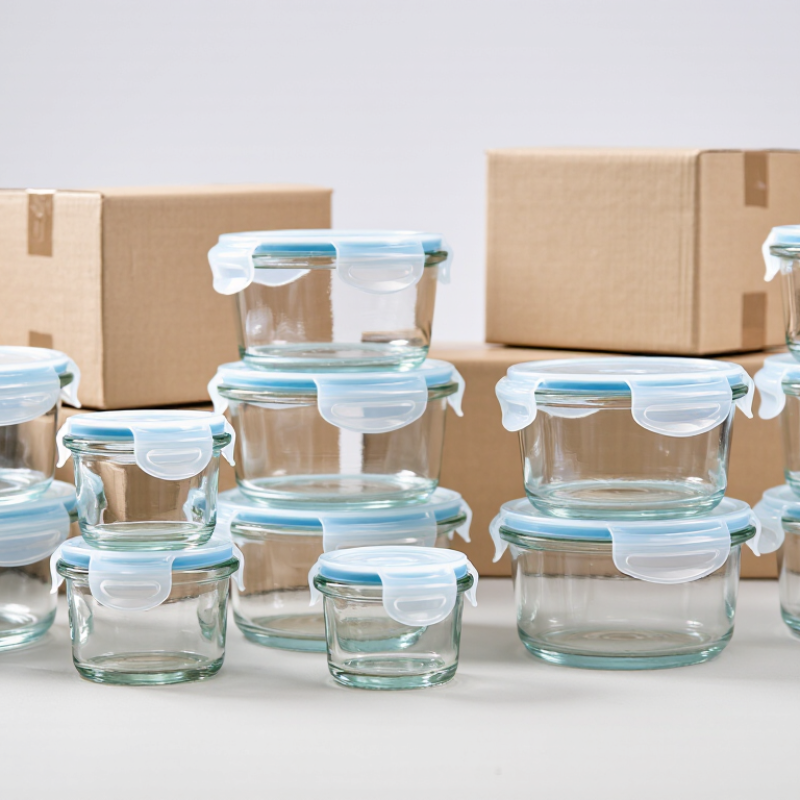
Glass round storage containers suit bulk buyers because they offer consistent sizing, clean visibility, and reusable performance. Buyers can inspect food, ingredients, or samples without opening every container. Round shapes also reduce sharp corners, making washing easier and handling more comfortable. In warehouse testing, thick glass usually resists daily use better than thin glass. However, glass still breaks when dropped or exposed to sudden temperature changes. That weakness deserves serious planning.
Tips: Check wall thickness, lid fit, stacking stability, and carton protection before ordering. Request samples from different production batches. Measure the inner diameter, not only the advertised capacity. Confirm whether the lid seals firmly after repeated opening. A small mismatch can create large losses across thousands of units. Consider dividers, edge protection, and replacement rates when calculating the real purchase cost.
Bulk buyers should also examine storage conditions and transport routes. Standardized containers simplify shelving, labeling, and inventory counting. Clear surfaces help workers notice residue, cracks, or incorrect contents quickly. Yet round containers may waste some shelf space compared with square designs. This trade-off is easy to overlook. Reliable suppliers should provide material details, tolerance information, packaging specifications, and inspection records. Buyers may also request drop-test evidence and food-contact documentation when relevant. Not every attractive container is practical at scale. A lower unit price can become expensive after breakage, returns, or inefficient storage.
Bulk buyers need more than attractive glass. They need consistent materials, usable shapes, and capacity choices that survive repeated handling.
A practical top-ten shortlist includes round jars, straight-sided canisters, wide-mouth bowls, stackable containers, nesting sets, tall pantry vessels, squat lunch boxes, freezer-safe tubs, portion cups, and large dispensing jars.
Most options use soda-lime glass, which offers economical strength for dry foods and refrigerated storage. Borosilicate glass handles sharper temperature changes, but it usually costs more. Tempered glass can improve impact resistance, although it is not unbreakable.
Choose food-contact lids made from tested polypropylene, silicone, or stainless steel. The glass should be clear, smooth, and free from visible bubbles or edge chips.
Round shapes clean easily, yet they waste some shelf space beside square cartons. Straight walls improve filling and labeling. Wide openings help workers remove grains, powders, or prepared foods without scraping corners.
Common bulk capacities range from 250 milliliters to 2 liters, while larger 3- to 5-liter vessels suit commercial kitchens. Sizes need practical spacing between them. Otherwise, the set looks complete but stores poorly.
The U.S. Environmental Protection Agency reported a 31.3% recycling rate for glass containers in its latest detailed national container data. That figure supports selecting durable, reusable units over thin disposable formats.
Thermal-shock testing, drop testing, and lid-cycle testing should appear in supplier documentation. I would not trust a capacity chart alone. Actual fill tests often reveal unusable headspace.
For bulk buyers, round glass storage containers should be compared by use, not appearance. The top ten types serve different packing and handling needs. Straight-sided jars offer easy filling and scraping. Clamp-lid jars provide a firm seal for dry goods. Screw-top containers stack neatly and reduce accidental opening. Wide-mouth jars suit scoops, powders, and chunky ingredients. This difference matters during daily warehouse work.
Nesting bowls reduce empty volume during transport and storage. Divided containers separate small portions, though their seals can be harder to inspect. Handle-equipped rounds improve carrying, especially for heavier contents. Freezer-rated containers resist cold stress when used correctly. Oven-rated glass supports heat-based preparation, but sudden temperature changes remain risky. Measuring-marked containers help kitchens control portions and reduce extra tools. Labels should face outward. Simple, but often missed.
For procurement teams, inspect rim consistency, lid fit, wall thickness, and carton protection. Ask for sample testing before approving a large order. Check repeated washing, stacking pressure, and temperature changes. Clear glass is not automatically durable. In one evaluation, a tight lid slowed packing because workers needed utensils to open it. That small flaw increased handling time and damage risk. Supplier documents should state capacity, dimensions, materials, and care limits. Some comparisons remain imperfect because performance depends on handling habits. Review those habits before choosing the cheapest type.
| No. | Container Type | Nominal Capacity | Typical Diameter × Height | Common Glass Material | Typical Lid Style | Best Bulk-Buying Use | Stacking Profile | Important Purchasing Check |
|---|---|---|---|---|---|---|---|---|
| 1 | Mini Round Glass Container | 120–150 ml | 75–85 mm × 45–55 mm | Soda-lime or borosilicate glass | Snap-fit plastic lid | Sauces, spices, baby-food portions, samples | Highly space-efficient when nested | Check lid seal quality and portion labeling area |
| 2 | Small Round Glass Container | 240–300 ml | 90–105 mm × 55–65 mm | Tempered soda-lime or borosilicate glass | One-piece or four-tab snap lid | Snacks, dressings, side dishes, portion control | Good for compact refrigerator storage | Confirm internal usable volume below the lid |
| 3 | Medium Round Meal-Prep Container | 400–500 ml | 105–125 mm × 60–75 mm | Heat-resistant soda-lime or borosilicate glass | Airtight snap lid with silicone gasket | Single meals, grains, vegetables, leftovers | Usually stackable with matching sizes | Verify whether the lid is oven-safe; most plastic lids are not |
| 4 | Large Round Meal-Prep Container | 650–750 ml | 130–145 mm × 65–80 mm | Borosilicate or tempered soda-lime glass | Leak-resistant snap lid | Large meals, salads, pasta, catering portions | Stable stacking with broad base | Assess empty-unit weight and carton breakage protection |
| 5 | Standard Round Storage Bowl | 900 ml–1 L | 150–175 mm × 70–90 mm | Tempered soda-lime glass | Plastic lid with silicone sealing ring | Family portions, prepared salads, refrigerated foods | Moderate; wide shapes need more shelf area | Check refrigerator shelf clearance and lid overhang |
| 6 | Deep Round Glass Container | 1.2–1.5 L | 165–190 mm × 90–115 mm | Borosilicate or thick tempered glass | Airtight lid with pressure-release feature | Soups, stews, bulk meal preparation | Efficient vertical storage | Check mouth diameter for filling and cleaning access |
| 7 | Round Glass Mixing and Storage Bowl | 1.8–2 L | 190–220 mm × 95–125 mm | Tempered soda-lime glass | Fitted plastic or silicone-seal lid | Baking ingredients, marinating, large leftovers | Often nestable without lids | Confirm rim strength, pouring comfort, and total carton volume |
| 8 | Extra-Large Round Food Storage Bowl | 2.5–3 L | 220–250 mm × 110–145 mm | Thick tempered soda-lime glass | Large removable-gasket lid | Commercial kitchens, events, family-size preparation | Requires reinforced shelf and careful handling | Review loaded weight, pallet configuration, and breakage allowance |
| 9 | Round Glass Canister with Wide Mouth | 1–2 L | 100–150 mm × 150–230 mm | Clear soda-lime glass | Screw, clamp, or silicone-seal lid | Dry goods, coffee, grains, baking ingredients | Tall profile saves counter width but limits shelf height | Check gasket replaceability and moisture resistance |
| 10 | Large Round Glass Bulk Canister | 3–4 L | 180–230 mm × 220–300 mm | Thick soda-lime glass | Clamp-top or screw-top airtight lid | Bulk flour, cereal, pasta, grains, pantry storage | Limited stacking; best stored upright | Verify handle strength, filled weight, pallet height, and food-contact compliance |
Note: Capacities and dimensions are typical commercial size ranges. Exact measurements, glass type, temperature resistance, lid compatibility, and food-contact certifications should be confirmed against the supplier’s technical specification before placing a bulk order.
For bulk buyers comparing the top 10 glass round storage containers, quality starts with measurable details. Check borosilicate or soda-lime composition, wall thickness, rim smoothness, lid fit, and heat-shock performance. Request food-contact test reports, dimensional tolerances, and random sample inspections. A container that looks clear may still have weak shoulders or uneven bases. In my purchasing experience, ten samples can reveal more than one polished catalog image. Durability matters.
Pricing should include the complete landed cost, not only the unit quotation. Compare container, lid, carton, inspection, freight, insurance, and possible breakage allowances. The U.S. EPA’s 2018 Facts and Figures report recorded about 12.3 million tons of glass containers generated and 3.1 million tons recycled. That figure supports glass’s recovery value, but recycling does not remove transport costs. Ask for pallet-level pricing and tier breaks. A low unit price can hide expensive packaging.
Tips: Require a pre-production sample and a drop-test record. Measure the inner diameter, usable volume, and nesting clearance. Packaging should use dividers, corner protection, and moisture-resistant cartons. Request photos of pallet loading before dispatch. Shipping data deserves attention: confirm carton count, gross weight, pallet dimensions, and delivery terms. Review the International Safe Transit Association test method used by the supplier. Perfect protection is unlikely. I would still approve a small trial order before committing to a full container. Temperature changes, rough handling, and lid deformation can expose weaknesses that laboratory documents miss.
For bulk buyers, round glass containers need more than attractive photos. Safety starts with traceable composition, food-contact declarations, and batch-level inspection records. U.S. EPA’s 2018 Advancing Sustainable Materials Management report recorded 3.7 million tons of recycled glass containers, equal to 31.3% of generation. That supports glass recycling, but recycled content still requires controlled sorting and cleaning. Ask suppliers for migration testing, closure compatibility, and test results for chips, cracks, and uneven rims. A certificate alone is not enough.
Care instructions should match real warehouse conditions. Avoid sudden temperature changes, especially when filling chilled containers with hot liquids. Use dividers during transport. Round walls distribute pressure well, yet thin glass can fail after repeated impacts. Customization may include volume, neck finish, cap liner, embossing, and carton inserts. Confirm dimensional tolerances before approving tooling. Small changes can disrupt filling lines.
Supplier evaluation should include pilot samples, production photographs, and independent laboratory reports. FEVE’s 2023 European glass packaging data indicates collection rates above 80% in several markets, but collection does not guarantee container-grade quality. Review defect rates, replacement policies, lead times, and factory audits. Request three consecutive batch samples. They may not match perfectly. That difference deserves investigation, not excuses. A perfect checklist is unrealistic; documented answers are not.
Clear walls let workers inspect contents without opening every container. Round sides clean easily and feel comfortable during handling. Glass still breaks.
Soda-lime glass suits dry foods and refrigerated storage at a lower cost. Borosilicate glass handles sharper temperature changes but costs more. Tempered glass improves impact resistance, not immunity.
Common sizes range from 250 milliliters to 2 liters. Larger 3- to 5-liter containers suit commercial kitchens. Measure actual fill space.
Check wall thickness, lid fit, stacking stability, and carton protection. Measure inner diameter, not advertised capacity alone. Small mismatches multiply quickly.
Use dividers, edge protection, and strong carton inserts. Review drop-test evidence and replacement rates. A cheap carton can become expensive.
Standard sizes simplify shelving, labeling, and inventory counting. However, round shapes may waste space beside square cartons. This trade-off is easy to miss.
Request material details, food-contact declarations, migration tests, and inspection records. Also review closure compatibility and crack testing. One certificate is not enough.
Avoid sudden temperature changes, such as adding hot liquid to chilled glass. Inspect rims for chips and cracks before use. Slow handling helps.
Request pilot samples and three consecutive production batches. Compare dimensions, lids, surfaces, and defect rates. They may not match perfectly.
Include breakage, returns, replacement units, packaging, and wasted shelf space. Durable glass may lower long-term waste. I would still test the numbers.
This guide examines why glass round storage containers are a practical choice for bulk buyers, focusing on their durability, transparency, hygienic properties, and suitability for food, household, and commercial storage. It reviews key material options, including heat-resistant and tempered glass, along with different shapes, sizes, capacities, lids, and stacking designs. Ten common container types are compared to help buyers match products with storage needs, usage environments, and space requirements.
The article also explains essential bulk purchasing criteria, such as consistent quality, competitive pricing, protective packaging, reliable shipping, and manageable order quantities. Additional guidance covers safe handling, cleaning, temperature limits, lid care, customization possibilities, and supplier evaluation. Buyers will learn how to assess product specifications, request samples, verify manufacturing consistency, and select dependable suppliers capable of meeting large-volume orders while maintaining safety, presentation, and delivery standards.
