
Choosing freezer safe glass storage containers is no longer a niche kitchen decision. It reflects growing demand for durable, reusable food-storage products. Grand View Research estimates that the global food storage container market will continue expanding through the decade, supported by meal preparation, household waste reduction, and reusable packaging trends. The Glass Packaging Institute also emphasizes glass’s inert surface, recyclability, and resistance to absorbing food odors.
Still, “glass” does not automatically mean freezer-safe. That distinction matters. A warm container placed beside frozen food can develop thermal shock and crack suddenly. USDA Food Safety and Inspection Service specialist Meredith Carothers explains, “Freezer burn does not make food unsafe, but it can affect the quality of the food.” Her guidance reminds shoppers to consider protection, not appearance alone.
Small details matter.
This guide presents seven practical tips for choosing freezer safe glass storage containers. We will examine borosilicate or tempered glass, expansion space, airtight lids, container shapes, labeling, and safe thawing practices. Product testing should also consider repeated temperature changes, because a container may survive one freezing cycle but fail after months of use. That uncomfortable possibility is easy to overlook.
The recommendations draw on food-safety guidance, packaging research, and everyday kitchen experience. A container with thick glass may feel reassuring, yet its lid may leak. A beautiful design may waste freezer space. The best choice balances safety, durability, usability, and realistic household habits. Careful selection reduces cracked containers, freezer burn, spills, and unnecessary replacement costs.
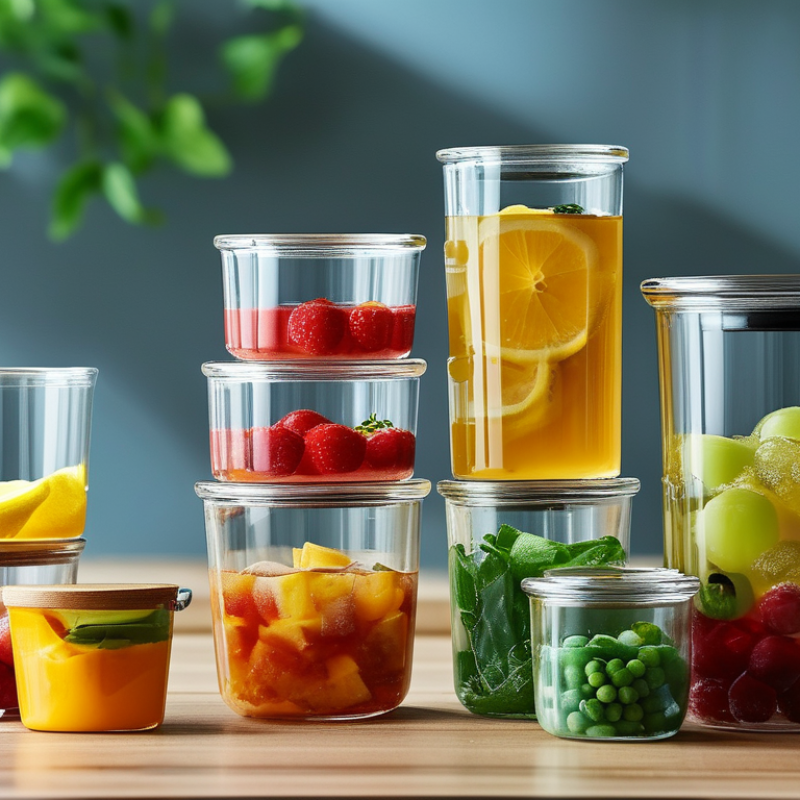
Choosing freezer-safe glass starts with its composition and tested temperature range. Soda-lime glass is common, but it can crack under sudden thermal change. Borosilicate glass usually tolerates wider temperature swings because it expands less. Tempered glass adds strength, yet “tempered” does not automatically mean freezer-safe. Check the container’s printed rating, not only its appearance.
The USDA FSIS recommends keeping freezers at 0°F (-18°C) or below. European cold-chain guidance also uses -18°C for quick-frozen food. A suitable container should clearly support that temperature, with a safety margin confirmed by its manufacturer. Look for freezer-safe labeling, a maximum fill line, and a lid designed for expansion. Leave about 2.5 centimeters of headspace for soups and sauces. Avoid moving hot glass directly into a freezer. Let food cool first. Never place a cold container on a hot surface.
I have seen strong-looking glass fail after one careless temperature change. The container was not defective; the transition was too severe. Do not freeze damaged, chipped, or deeply scratched glass. Choose borosilicate or tested tempered glass when possible, verify the rating in the product specification, and freeze portions in shallow shapes. The rating matters more than marketing language. When information is unclear, I would not risk it.
Choosing the right shape makes freezer storage safer and more practical. Straight-sided glass containers handle expansion better than narrow jars with rounded shoulders. Food and liquid expand as they freeze, so leave about 2–3 centimeters of headspace. Leave room.
Rectangular containers usually stack neatly and use freezer shelves efficiently. They also fit meal portions, cooked grains, and sliced vegetables without awkward gaps. Choose a size that matches one meal, rather than freezing a large batch in one deep container. A shallow 500-milliliter container cools and freezes more evenly than a tall, crowded one. Shape matters.
Capacity should match both the food and your handling habits. Fill containers only to their recommended level, and check that the glass is specifically labeled freezer safe. Not all glass tolerates sudden temperature changes. Cool food before freezing, but do not leave it at room temperature for extended periods. Place the container upright until fully frozen, then stack it carefully.
I once overfilled a container with soup and underestimated how much it would expand. The lid lifted slightly, and cleanup followed. I still misjudge portions occasionally. For liquids, select a wider container with extra headspace. For dry foods, a fuller container may work, but avoid forcing the lid closed. Inspect glass for chips or hairline cracks before every use. A small defect can become a serious break during freezing or thawing.
| Tip | Container Shape | Recommended Capacity | Useful Approximate Dimensions | Best Use | Important Freezer-Safety Check |
|---|---|---|---|---|---|
| 1. Choose freezer-rated glass | Any shape; prioritize purpose-designed storage glass | Select according to the portion size | Varies by design | General meal, ingredient, and leftover storage | Confirm that the manufacturer specifically states the glass is freezer safe. Avoid ordinary drinking glasses, decorative glass, and damaged containers. |
| 2. Select a rectangular shape | Rectangular, straight-sided | 1.0–2.0 L | Approximately 20–25 × 15–20 × 5–8 cm | Casseroles, cooked grains, vegetables, and family-size leftovers | Flat sides use freezer shelf space efficiently and make stacking easier. Leave room for expansion rather than filling to the rim. |
| 3. Use square containers for compact stacking | Square or near-square | 0.5–1.0 L | Approximately 12–16 × 12–16 × 6–8 cm | Soups, sauces, cooked beans, and meal-prep portions | A straight-sided design minimizes unused corners. Keep lids level and avoid stacking more weight than the container instructions allow. |
| 4. Choose shallow containers for faster freezing | Wide and shallow rectangular | 0.5–1.5 L | Approximately 18–25 × 12–18 × 4–6 cm | Single meals, cooked meat, fish, and flat portions of food | Smaller food depths generally freeze more quickly and evenly. Do not place hot food directly into a cold glass container. |
| 5. Match capacity to serving size | Small, medium, or large based on portions | 250–500 mL per individual serving; 1–2 L for family portions | Small: approximately 10–14 cm wide; medium: 14–18 cm; large: 18–25 cm | Portion control, packed lunches, and batch cooking | Avoid excessive empty space because it increases exposure to air and may contribute to freezer burn. Avoid overfilling because frozen food expands. |
| 6. Allow headspace for expansion | Prefer straight-sided containers with broad openings | Leave about 10% empty space for liquid-rich foods | Use the fill line or instructions when provided | Soups, stews, broths, fruit, and other foods with high water content | Water expands by approximately 9% when it freezes. Keep food below the lid and never force a lid onto an overfilled container. |
| 7. Check lid fit and temperature transition guidance | Flat, secure lid with a leak-resistant seal | Choose a lid that matches the container size | A lid should sit evenly without bending or pressure | Freezer-to-refrigerator storage and organized meal preparation | Glass can break from thermal shock. Let frozen food thaw in the refrigerator before reheating, and follow the product instructions for oven, microwave, dishwasher, and freezer use. |
Note: Capacity ranges and dimensions are practical estimates rather than universal standards. Always check the specific container’s freezer rating, maximum fill line, lid instructions, and temperature limits before use.
A freezer-safe glass container needs a dependable lid, not just thick glass. Check that the lid sits evenly around the rim, with no lifted corners or visible warping. A flexible silicone gasket can improve the seal, especially when storing soup or sauces. Press around the entire edge after closing. You should feel consistent resistance, not a loose spot.
Look for secure clips or a firm locking mechanism. These features help prevent leaks when containers are moved from the freezer to a refrigerator. Test the container with cool water before trusting it with food. Close the lid, turn it upside down over a sink, and watch for drips. This test is useful, but it is not perfect. Freezing changes pressure inside the container. Leave about two centimeters of space for liquids to expand, and never force a lid onto an overfilled container.
I once stored broth in a container that seemed tightly closed. The lid leaked after the broth froze, leaving an unpleasant icy shelf. The seal looked fine, but one corner had not clicked properly. Now I inspect each locking point and wipe the rim completely dry. Food particles, frost, or sauce residue can weaken the seal. Choose lids that remain flexible in cold conditions, and replace any gasket that becomes cracked, stiff, or permanently flattened. Labeling the contents and date also helps avoid repeated thawing and refreezing.
Water expands by approximately 9% when it freezes. Use the chart to estimate the minimum expansion allowance for water-based foods, then choose a freezer-safe glass container with extra headspace, a secure lid, an intact seal, and leak-resistant construction.
The values are calculated from a 9% volume increase: expansion allowance = food volume × 0.09. Actual expansion varies with ingredients, air content, and freezing temperature. Never fill glass containers to the rim, and verify that both the glass and lid are specifically rated for freezer use.
Freezer-safe glass containers are useful, but proper filling matters more than the label. I learned this after a container cracked when soup expanded overnight. Leave about 2.5 centimeters of headspace for watery foods, and more for thick soups or sauces. Check the manufacturer’s guidance, because glass shapes and types differ. Cool hot food briefly before filling, but do not leave it at room temperature for hours. Divide large portions into shallow containers. They chill faster and reduce time in the temperature danger zone. Keep the lid slightly loose while the food cools, then seal it before freezing. This can help prevent pressure buildup.
Wipe the rim completely dry. A clean rim helps the seal hold and reduces icy residue. Use straight-sided containers when possible; narrow shoulders can trap expanding food. Never pour boiling liquid into chilled glass. Sudden temperature changes may cause thermal shock. Place containers upright on a level shelf, with space between them until solid. Once frozen, stack them carefully and label the date and contents. Leave room for expansion. Do not force a frozen lid open or move a container directly from the freezer to a hot oven. Thaw food in the refrigerator, or use a microwave-safe container for reheating. I still overfill occasionally when rushing. That mistake remains a useful warning. A small gap is cheaper than broken glass and wasted food.
Choosing freezer-safe glass storage containers starts with a close inspection, not attractive shapes. Look for clear freezer-use guidance and a temperature range in the instructions. Borosilicate glass may resist temperature changes better, but no glass is shockproof. Avoid chips, hairline cracks, cloudy patches, or rough rims. These defects can worsen when water-based food expands during freezing. Leave headspace, especially for soups, sauces, and cooked grains. I once filled a container too high, and the frozen lid lifted slightly. That small mistake made cleanup surprisingly messy.
Durability depends on more than thick walls. Press gently around the base and corners; weak spots often appear there. A flat, stable base helps prevent tipping in a crowded drawer. Choose lids that seal firmly without forcing them onto cold glass. Check hinges, clips, and silicone seals for bending or gaps. A loose seal invites freezer burn and absorbs odors. Do not move a frozen container directly into a hot oven or onto a heated surface. Thermal shock can break even undamaged glass. Use gradual temperature changes instead.
Easy cleaning is a safety feature, not merely a convenience. Inspect the interior corners for narrow grooves where sauce can hide. Smooth walls and removable seals usually require less scrubbing and dry faster. Wash containers promptly, then inspect them under bright light. Persistent stains are not always dangerous, but lingering odors suggest poor cleaning. Dishwasher use may be suitable, yet confirm the care instructions first. I sometimes overlook the underside of lids. That is where residue quietly remains. Replace any piece that develops a crack, loose seal, or rough edge.
: Borosilicate glass often handles temperature changes better than ordinary soda-lime glass. Tempered glass is stronger, but it is not automatically freezer-safe. Check the printed temperature rating.
Choose a container rated for at least 0°F (-18°C). A safety margin is helpful. Do not rely only on attractive appearance or vague wording.
Leave about 2.5 centimeters of headspace for soups and sauces. Thick foods may need more room. Never fill the container to its lid.
Straight-sided, rectangular containers usually manage expansion and stacking more effectively. Shallow containers freeze portions more evenly. A 500-milliliter container may suit one meal better than a deep jar.
No. Let hot food cool briefly before freezing it. Never pour boiling food into chilled glass. Sudden temperature changes can cause thermal shock.
Inspect it for chips, scratches, and hairline cracks. Wipe the rim completely dry. Keep the container upright on a level shelf. Leave space around it until the food freezes solid.
Dividing food into shallow portions is usually safer and more practical. The food chills faster. Portion sizes also make later handling easier. I still overfill containers when rushing.
Thaw the food in a refrigerator. Use a separate microwave-safe container for reheating when needed. Do not move frozen glass directly into a hot oven or onto a hot surface. That transition can end badly.
Choosing freezer safe glass storage containers starts with confirming that the glass is designed to handle very low temperatures and sudden temperature changes. Look for clear temperature ratings and avoid moving a container directly from a hot oven or warm surface into the freezer. Select a shape and capacity that match your meals, leaving enough headspace for food to expand as it freezes. Straight-sided containers are often easier to fill, stack, and clean.
Lids and seals should fit securely and help prevent leaks, freezer odors, and spills. Before freezing, cool food properly, avoid overfilling, and label each container with its contents and date. Inspect the glass regularly for chips, cracks, or scratches, and replace damaged pieces immediately. Durable containers with smooth interiors, dishwasher-safe materials, and easy-to-clean lids can make storage more convenient and support safer, more organized meal preparation.