
Buying stackable glass food containers looks simple until the first crowded refrigerator shelf tells a different story. A container may stack neatly in a product photo, yet wobble when filled with soup. Its lid may also collect moisture around the seal. Small details matter.
Scott DeFife, president of the Glass Packaging Institute, has described glass as “infinitely recyclable.” That quality makes glass appealing, but sustainability alone does not guarantee a useful container. Buyers must examine the complete system: glass thickness, lid design, nesting shape, seal quality, and safe temperature limits. The best stackable glass food containers should support everyday routines, not merely look organized.
Think about your kitchen cabinet. Measure its depth before choosing a tall rectangular set. Check whether the lids stack separately or create a plastic tower. Look for clear capacity markings, wide openings, and corners that are easy to wash. A tight seal helps prevent leaks, but excessive pressure can make lids difficult to remove.
Read the care instructions carefully.
Not every glass container is oven-safe. Not every lid tolerates heat. Sudden temperature changes can damage glass, even when the container appears sturdy. Moving a chilled dish directly into a hot oven is an avoidable mistake. Allowing it to warm gradually is safer.
This guide explores seven practical tips for buying stackable glass food containers. It also questions a common assumption: more pieces do not always mean better value. A smaller, compatible set may serve weekday lunches better than a large collection with mismatched lids. Choose containers that fit your meals, storage space, and cleaning habits.
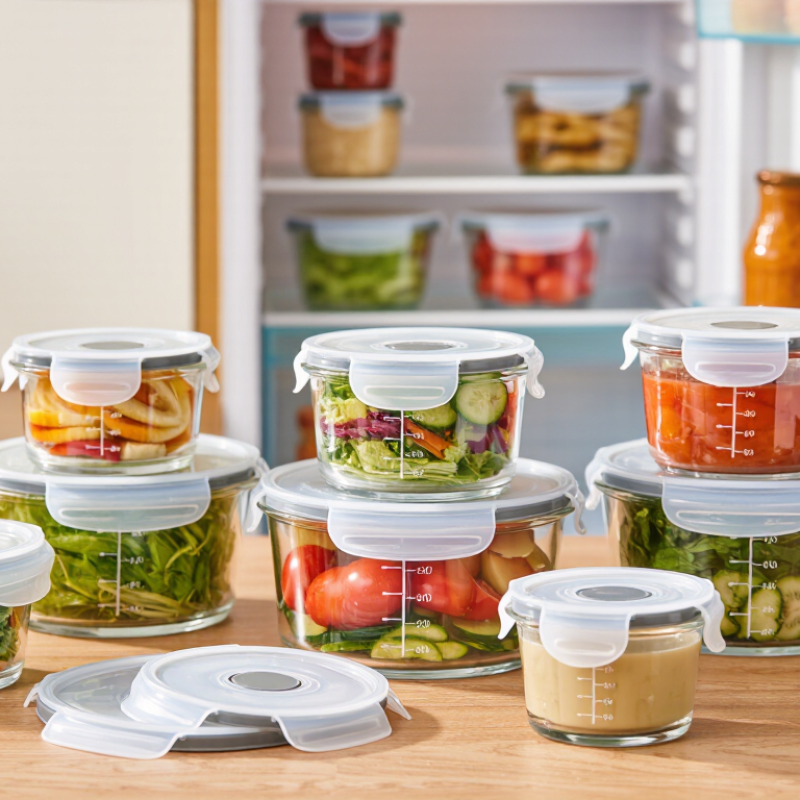
Stackable glass food containers make leftovers easier to see, store, and portion. Glass is nonporous, so it resists lingering odors, stains, and flavor transfer. Clear walls also reduce forgotten food in crowded refrigerators. The 2024 UNEP Food Waste Index Report estimates that 1.05 billion tonnes of food were wasted globally in 2022. Better visibility may help households use food sooner, though containers alone cannot solve waste.
Look for seven practical details when buying. Choose a stable, flat base. Check that lids seal firmly. Confirm the glass is oven-safe. Never move a hot dish into cold water. Select matching sizes for efficient stacking. Prefer readable volume markings. Test whether lids and dishes are easy to clean.
The U.S. Food and Drug Administration advises following manufacturer instructions for temperature limits and food-contact use. That guidance matters because glass can crack under sudden thermal shock. A tight seal also protects texture, but it does not make food safe indefinitely.
Stacking saves shelf space, yet glass is heavier than plastic. Carrying three filled containers can strain a weak lunch bag. It may also increase transport emissions, depending on distance and reuse frequency. The International Glass Association reports that glass is inert and widely recyclable, but recycling access varies by location. I still question whether every household needs a full matching set. A few durable sizes may be more useful than a tall cupboard of rarely used dishes. Check chipped rims often. Replace damaged pieces promptly.
Choosing the right glass type matters more than a polished lid. Borosilicate glass generally handles temperature changes better than ordinary soda-lime glass. However, it can still crack after sudden thermal shock. Check the manufacturer’s heating and cooling instructions carefully. Do not move a hot container directly into cold water. Tempered glass is also practical, especially for everyday storage, but it is not unbreakable.
Match the size to your meals, not your cupboard. A shallow container suits leftovers, sandwiches, and roasted vegetables. A deeper one works better for soup or pasta. Leave a little space above liquid foods. Square and rectangular shapes usually stack more efficiently than round ones. Straight sides also make scraping food easier. Look for flat, stable bases and lids that lock without excessive force. A loose lid is annoying. A brittle lid is worse.
Before buying, inspect the glass thickness and rim for tiny chips. Even a small defect can weaken the container. Choose several sizes that nest inside one another, while keeping enough height for stacked lids. Clear glass helps you identify food quickly, but condensation can hide spoiled edges. That detail is easy to overlook. I once assumed heavier glass always meant better quality; that was not necessarily true. Weight, shape, thermal rating, and lid design must work together. A slightly imperfect set may still be useful if its sizes fit your actual cooking habits.
7 Tips for Buying Stackable Glass Food Containers
Buying stackable glass food containers is less about appearance than daily compatibility. I learned this after a lid looked secure but leaked soup inside my work bag. Check that the lid sits evenly around the rim. Press each corner gently. A raised edge, warped plastic, or loose hinge can reveal a poor fit. The seal should feel flexible, not brittle. It should remain attached during washing, unless the instructions allow removal. Measure the container and lid as one set.
Use seven practical checks before buying. Inspect the gasket, test the locking tabs, and look for gaps around the edge. Fill the container with water and tilt it over a sink. This simple test exposes weak seals quickly. Stack empty containers to check whether their bases nest properly. Then add lids and repeat the test. A lid that extends too far may block another container. Small differences matter.
Compatibility also includes temperature use. Confirm whether the glass can move from a refrigerator to an oven, and whether the lid is microwave-safe. Never assume every part shares the same rating. Follow the maker’s care instructions, especially for sudden temperature changes. I once heated a chilled container too quickly and regretted ignoring that warning. Inspect seals after several washes, because a perfect first fit may weaken later. Replace any lid that cracks, bends, or stops closing firmly.
Use this checklist to compare lids, seals, and overall container compatibility before purchasing.
The chart assigns one practical verification point to each recommended buying tip. A higher value means more compatibility details should be checked before purchase. Confirm that the lid fits securely, the seal is intact, sizes stack properly, and the container is suitable for the intended storage or heating use.
In daily meal preparation, glass containers make food storage easier to inspect and organize. Choose borosilicate or tempered glass when the manufacturer clearly states its heat resistance. Material details matter more than attractive packaging.
Inspect each container for tiny chips, uneven rims, or hairline cracks before buying. These flaws can worsen after repeated heating and cooling. A secure lid should close evenly without excessive force. Silicone seals help prevent leaks, but removable seals are easier to wash thoroughly. Check whether the lid can handle refrigerator and freezer use. Some lids warp when exposed to high heat.
Durability also depends on practical stacking design. Look for flat bases and stable corners. Containers should nest without scraping one another. Leave space between hot glass and cold surfaces. Sudden temperature changes can cause breakage.
I once ignored this detail, and a warm dish cracked on a stone counter. Not ideal.
Cleaning requires equal attention. Wide openings allow a sponge to reach corners and reduce trapped food. Smooth interiors usually resist lingering odors better than textured surfaces. Check the seal groove carefully, because grease often hides there.
Wash removable parts separately and dry them fully before reassembly. Avoid abrasive tools that can create surface scratches. Over time, cloudy glass may signal residue, not damage, but deep scratches deserve caution.
Stackable glass food containers should be judged beyond their shelf price. Storage features, replacement costs, and expected lifespan often matter more. The U.S. Environmental Protection Agency reported that glass containers generated about 12.3 million tons of waste in 2018, with a recycling rate near 31%. Recycling helps, but preventing breakage is usually more practical.
Tip 1: Check nesting sizes before buying. A tidy stack saves cabinet space and reduces daily frustration.
Tip 2: Choose lids with firm seals and available replacements. A lost lid should not destroy an otherwise useful container.
Tip 3: Confirm oven, microwave, freezer, and dishwasher instructions. Sudden temperature changes can crack glass.
Tip 4: Compare usable volume, not external dimensions. Thick walls may reduce actual storage space.
Price should be calculated per use. Divide the purchase price by realistic uses, then add replacement lids and breakage. A $40 set used 300 times costs about 13 cents per use, before replacements. WRAP’s reuse research shows that reusable systems gain environmental advantages only after sufficient reuse cycles. The exact threshold varies by washing, transport, and product weight. That detail is easy to overlook.
Tip 5: Prefer durable, clearly marked glass.
Tip 6: Inspect rims after washing. Small chips can worsen quickly.
Tip 7: Buy only the sizes you repeatedly use. My own weak point is buying attractive shapes that stack poorly. Long-term value depends on habits, not appearance alone.
Clear walls make food easy to see in a crowded refrigerator. This can reduce forgotten meals. Glass also resists odors, stains, and flavor transfer.
Choose a flat, stable base and matching sizes. Check the lid, markings, glass rating, and cleaning difficulty. Small gaps matter.
Fill the container with water and tilt it over a sink. Press each lid corner gently. A loose edge or warped section suggests leakage.
No. Confirm the temperature rating first. Sudden temperature changes can crack glass, especially when cold glass meets high heat.
Not always. Check the lid’s separate instructions because glass and lid materials may have different temperature limits. Never assume they share one rating.
Matching bases and lids create steadier piles. Stack empty containers first, then repeat with lids attached. A lid extending too far can block another container.
Not necessarily. Glass is durable and widely recyclable, but it is heavier. Three filled containers may strain a small lunch bag.
Inspect rims, lids, seals, and locking tabs after washing. Replace chipped glass or cracked lids promptly. I sometimes overlook small damage, which is a mistake.
No. Visibility may encourage earlier use, but containers cannot manage meals alone. A clear box still needs a timely eating plan.
Buying stackable glass food containers can make meal preparation, refrigeration, and pantry organization more efficient, but the right choice depends on more than appearance. Start by considering the advantages of stackable designs, such as saving space and keeping different foods organized. Select glass that suits your needs, and compare sizes and shapes based on portion control, storage areas, and cooking routines. A practical set should include containers that fit neatly together without wasting space.
Pay close attention to lids, seals, and compatibility between each container and its cover. Secure, well-fitting lids help prevent leaks and preserve freshness. The glass should be durable, easy to clean, and suitable for the intended food-storage conditions. Finally, compare useful features such as nesting ability, transparency, labeling convenience, and resistance to stains or odors with the overall price. A slightly higher initial cost may provide better long-term value if the containers remain reliable, versatile, and easy to maintain.