
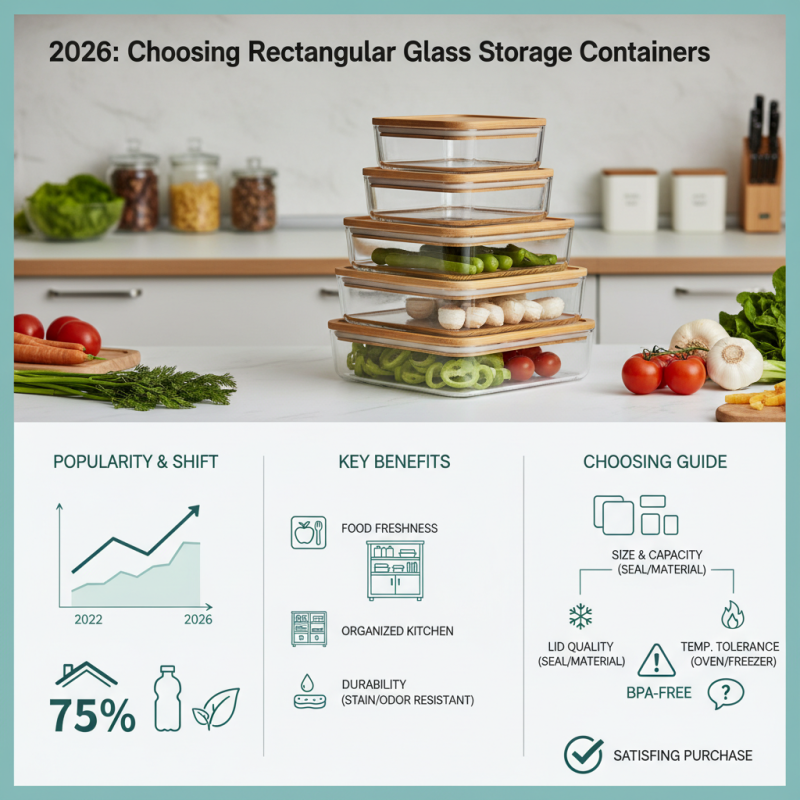
In recent years, rectangular glass storage containers have gained immense popularity among consumers seeking practicality and aesthetic appeal. According to a 2022 industry survey, nearly 75% of households utilize glass containers for food storage. This figure underscores a significant shift towards safer, environmentally friendly alternatives to plastic.
These containers not only maintain food freshness but also present an organized kitchen appearance. The durability of rectangular glass storage containers is a crucial factor, with studies indicating that glass is less prone to staining and odors compared to plastic. However, choosing the right container can be overwhelming. Factors like size, lid quality, and temperature tolerance must be considered.
Furthermore, experts warn of potential pitfalls. Many consumers overlook the importance of checking for BPA-free options in containers. Understanding personal needs is essential, as not all rectangular glass storage containers serve the same purpose. Evaluating these aspects carefully can lead to a more satisfying purchase decision.
When selecting rectangular glass storage containers, understanding their features is crucial. According to industry research, 80% of consumers seek durable and versatile containers for food storage. These containers should be heat-resistant and safe for microwave use. This ensures easy reheating without harmful chemical leaching, which can occur with inferior materials.
Transparency is another significant feature. Clear glass allows users to see contents at a glance, promoting better food organization. Research indicates that organized storage helps reduce food waste by 25%. Additionally, containers with airtight lids can significantly extend food shelf life, making it easier to maintain freshness.
However, not all glass containers are created equal. Some may chip or break easily, especially if they are made of low-quality glass. It's important to prioritize quality checks when selecting products. Sometimes, a lower price might mean compromised durability. Balancing budget with quality is a common challenge for many buyers. Being meticulous in your choice can lead to long-term benefits, making your kitchen more efficient.
| Feature | Description | Advantages | Considerations |
|---|---|---|---|
| Material | Borosilicate glass, which is durable and can withstand temperature changes. | Resistant to thermal shock, dishwasher safe, and non-porous. | Can be heavier than plastic alternatives. |
| Size Options | Available in various sizes from small to large capacity. | Versatile for different storage needs. | Ensure the size fits your storage space. |
| Lid Type | Tight-sealing lids made from plastic or glass. | Keeps food fresh longer and prevents spills. | Plastic lids may need to be replaced over time. |
| Stackability | Designed to be stackable for efficient storage. | Saves space in the fridge or pantry. | May limit access to bottom containers. |
| Microwave Safe | Can be used in microwaves for reheating. | Convenient for quick meal preparation. | Check for lid compatibility; some lids may not be microwave safe. |
| Oven Safe | Certain models can be used in ovens. | Multi-functional for baking and cooking. | Verify temperature limits for each product. |
: Airtight lids keep food fresh by preventing air and moisture. This can help reduce food waste significantly.
Yes, non-airtight lids are often easier to open and close. This convenience can encourage better organization.
Yes, perishable goods may spoil faster. They can lose quality up to 20% quicker than airtight options.
Borosilicate glass is preferred for its strength and ability to withstand extreme temperatures.
Look for non-toxic, lead-free glass. Ensure it’s free from harmful additives for safe food storage.
Yes, clear glass containers enhance aesthetic appeal. Their sleek design fits well in open kitchens.
Absolutely, the right sizes can add visual interest. Uniform shapes create an organized appearance in storage.
Yes, clarity helps with convenience. It adds to the overall aesthetic and allows for easy access to contents.
Consider storage needs, usage frequency, and desired aesthetics. Embrace imperfections in design that catch your eye.
When selecting the best rectangular glass storage containers, it's essential to understand their key features, including material safety and durability. These containers come in various sizes and capacities, allowing for versatile storage solutions tailored to your needs. Additionally, the choice between airtight and non-airtight lids can significantly impact food preservation and freshness.
Design and aesthetic considerations also play a role in the selection process, as many people prefer containers that complement their kitchen decor. By evaluating these factors, you can ensure that your rectangular glass storage containers are not only practical but also visually pleasing, making them a valuable addition to your kitchen organization.
