
Choosing large glass pantry storage containers can make a kitchen feel calmer, cleaner, and easier to use. However, attractive jars are not automatically practical. Their weight, lid design, capacity, and shelf stability matter every day. A container that looks elegant online may become awkward when filled with rice or flour.
This guide shares ten practical tips based on common pantry organization needs and careful product evaluation. You will learn how to compare glass thickness, airtight seals, opening sizes, stackability, and measurement markings. Small details matter. A wide mouth helps with scooping oats. A secure lid protects cereal from moisture. Clear glass also lets you check supplies before creating another shopping list.
Safety deserves attention, too. Heavy containers should rest on strong, level shelves. Keep frequently used jars within comfortable reach. Do not ignore chips, sharp edges, or loose lids. They can turn a tidy pantry into a frustrating space. I have found that buying a complete matching set is not always the best choice. Different foods often need different shapes and sizes. That realization may challenge the “perfect pantry” images seen online.
The goal is not a showroom. It is a reliable storage system that supports real cooking, busy mornings, and occasional mistakes. Use these tips to choose large glass pantry storage containers that fit your shelves, habits, and household needs. Good organization should save effort, not create another chore.
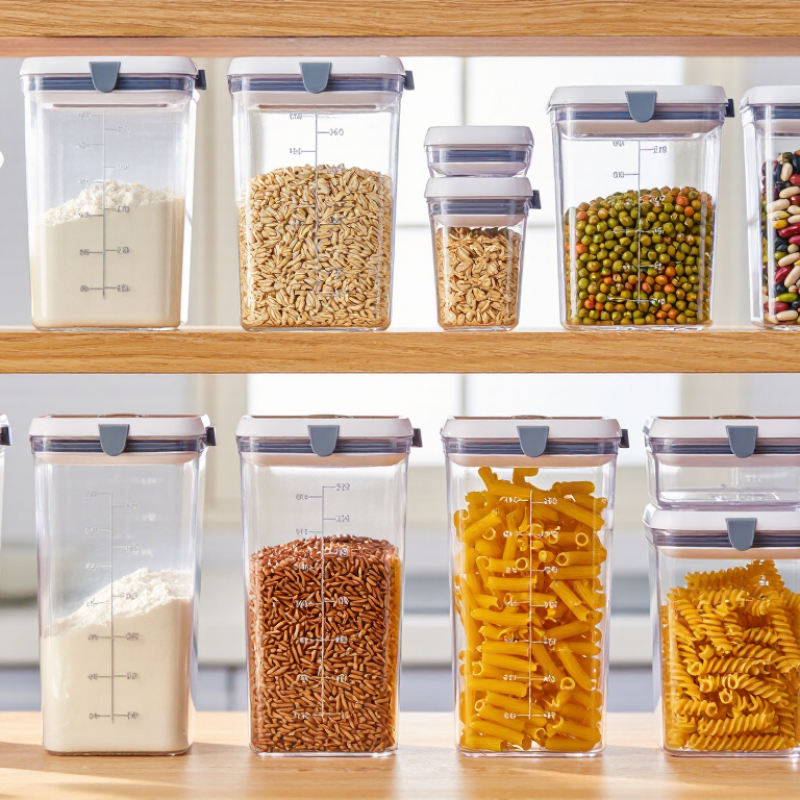
Before buying large glass pantry containers, define what your pantry must hold. Measure each shelf’s width, depth, and vertical clearance. Include the door frame and shelf supports. A container may fit on paper, yet fail when the door closes.
The U.S. Department of Agriculture estimates that 30–40% of the American food supply is lost or wasted. Clear containers can reduce forgotten ingredients, but only when their capacity matches your household’s use. Record how much rice, flour, cereal, or pasta you consume monthly. A large jar suits frequent staples, not rarely used ingredients.
The U.S. Environmental Protection Agency reported that food makes up about 24% of landfill waste by volume. Better visibility may support smarter purchasing and storage.
Still, glass is heavy. Check shelf strength before filling several large containers. I once planned a neat row of tall jars and overlooked a low cabinet hinge. The arrangement looked excellent, but the door became useless. That mistake changed my measuring routine.
Leave enough hand clearance for lifting, and reserve lower shelves for heavier containers. Consider smaller vessels for ingredients used slowly.
Your pantry should reflect real habits, not an idealized photograph.
Large glass containers should match your pantry routine, not merely look attractive. I prefer borosilicate glass for ingredients moved between shelves and warm kitchens. It tolerates temperature changes better than ordinary soda-lime glass, although no glass is immune to thermal shock. Never pour boiling food into a chilled container.
Material matters. The Glass Packaging Institute describes glass as endlessly recyclable without losing quality. That supports a longer-use storage choice, but recycling access still varies locally. Check your municipal guidance. A responsible purchase should consider the lid, seal, and replacement options too.
Shape controls usable space. Square containers usually waste less shelf width than round jars, while tall cylinders suit spaghetti, grains, and flour. Measure shelf depth before buying. A 2-liter container can become awkward when filled with dense beans. It may also be too heavy for a high shelf. I learned this through trial, and still occasionally choose attractive shapes over practical ones.
Size should follow consumption. The United Nations Environment Programme reported that households wasted about 631 million tonnes of food in 2022. Airtight containers cannot solve overbuying, but clear glass can make forgotten ingredients visible. Choose several medium containers instead of one oversized vessel. Leave headspace for scooping, and select wide openings for easy cleaning.
Use silicone or food-grade plastic seals when appropriate. Inspect them for cracks and lingering odors. Stack only stable, flat-sided containers. Small compromises matter.
Large glass containers look clean and reassuring, but the lid deserves equal attention. I check the rim, gasket, and locking points before buying. A heavy container with a weak seal is still a poor storage tool.
The USDA FoodKeeper guidance recommends storing dry foods in cool, dry places and checking package conditions regularly.
Moisture can soften flour, clump sugar, and reduce the quality of grains. Test the seal with a simple upside-down check. Nothing should shift or leak.
Look for food-contact materials that are smooth, nonabsorbent, and easy to clean. These qualities match the FDA Food Code 2022 requirements for food-contact surfaces.
A silicone or rubber gasket should sit evenly, without gaps or sharp folds. Press it gently. It should rebound, not remain flattened.
The lid should close without excessive force. Too much pressure may damage the seal over time.
I once ignored a tiny lid crack. That was careless.
Protection also means reducing wasted food. The United Nations Environment Programme Food Waste Index Report 2024 estimates that households generated about 631 million tonnes of food waste in 2022.
Airtight storage cannot solve that problem alone, but it can help preserve dry ingredients when used correctly.
Choose containers with enough headspace for scooping, and keep them away from heat and direct sunlight. Large sizes are convenient, yet awkward shapes can leave corners difficult to clean. Check those corners carefully. Moisture hides there.
Large glass pantry containers should survive daily handling, not merely look attractive on a shelf. When comparing durability, inspect the walls, base, rim, and lid fit closely. Thick glass usually resists knocks better, but it also adds weight. I once chose a heavy jar that felt secure, then disliked lifting it with wet hands. Rounded corners are easier to grip than sharp, decorative edges. Check for chips, hairline cracks, and uneven glass before buying.
Safety depends on more than a tight seal. Choose food-safe glass with a reliable lid, especially for flour, rice, nuts, and spices. Avoid sudden temperature changes, such as pouring boiling food into a cold container. Thermal shock can break glass without much warning. A silicone gasket may block moisture, but it should not smell strongly or feel sticky. Containers should stand steadily, with no rocking base. Small details matter.
Cleaning affects everyday use more than many shoppers expect. A wide opening lets a hand or measuring cup reach the bottom, while narrow jars often leave trapped powder in corners. Check whether the lid and gasket can be washed separately. Dry every part fully before storing dry goods. Otherwise, condensation may cause clumps or spoilage. Clear glass makes inventory easy, though sunlight can damage some ingredients. I still forget to label opened dates sometimes, so a writable label area is genuinely useful.
10 Tips for Buying Large Glass Pantry Storage Containers
Large glass containers should improve organization, not merely look tidy. Measure each shelf, including door clearance and hand space. I once bought tall jars that blocked the cabinet light. Measure twice. Group rice, flour, pasta, and snacks by cooking frequency. Transparent walls make low stock visible, which supports better household planning. The USDA estimates that 30–40% of the U.S. food supply is lost or wasted. Clear storage cannot solve waste alone, but it can expose forgotten ingredients earlier.
Labeling should remain practical. Write the food name, purchase date, and cooking instructions when useful. Use removable labels, because pantry habits change. WRAP’s Household Food Waste report estimated 6.6 million tonnes of household food waste in the UK in 2022. Clear labels may reduce confusion around similar grains, though this is not a guaranteed saving. I sometimes label too much, then ignore the labels. That is a design failure, not a user failure.
Price needs a long-term calculation. Divide the purchase cost by expected uses, then consider replacement lids, seals, and breakage. A low-priced jar may become expensive if its closure fails quickly. Check whether components can be replaced separately. Glass is sturdy, but a dropped container can create sharp fragments and wasted food. Consider weight, especially on wall-mounted shelves. The International Resource Panel reports that material efficiency can reduce environmental pressures across product lifecycles. Still, durable storage is not automatically better if it remains unused. Choose sizes matching your real shopping habits, not an imagined pantry.
| Tip | Evaluation Dimension | Practical Benchmark | What to Check Before Buying | Long-Term Value Indicator |
|---|---|---|---|---|
| 1 | Choose a useful capacity | Large pantry containers commonly hold about 1.5–5 L, depending on the food and shelf space. | Match the capacity to regular package sizes and measure cabinet height, width, and depth. | A practical size reduces unused space, food transfers, and the need to buy multiple replacement containers. |
| 2 | Prioritize food-safe glass | Borosilicate or soda-lime glass is commonly used; the product should clearly state food-contact suitability. | Look for smooth, chip-free surfaces and clear instructions for oven, freezer, dishwasher, and microwave use. | Durable glass resists odor and staining better than many plastics and can be reused for years when handled correctly. |
| 3 | Evaluate the lid seal | A removable silicone gasket and secure locking mechanism provide better protection against moisture and pantry pests. | Check whether the gasket is easy to remove, clean, dry, and replace. | Replaceable seals extend container life and help prevent premature disposal caused by worn or odorous gaskets. |
| 4 | Improve shelf organization | Uniform rectangular shapes generally use shelf space more efficiently than irregular round shapes. | Compare external dimensions, stackability, base stability, and access to the rear of the shelf. | Stable, stackable containers reduce clutter and make inventory checks faster. |
| 5 | Plan an effective labeling system | Labels should identify the food type and, when useful, the purchase date or best-before date. | Choose a flat, dry surface and use removable labels that remain readable after routine cleaning. | Consistent labels reduce duplicate purchases, support first-in-first-out use, and simplify household organization. |
| 6 | Check cleaning requirements | Wide openings are easier to wash and dry than narrow openings, especially for flour, rice, and grains. | Verify dishwasher compatibility and ensure the lid, gasket, and container can be cleaned separately. | Easy maintenance lowers the risk of residue buildup, odors, mold, and replacement costs. |
| 7 | Compare price per usable container | Calculate total set price divided by the number of containers, then compare capacity and included lids. | Include shipping, replacement lids, accessories, and any cost for labels or scoops. | The lowest initial price is not always the lowest cost if the set has weak seals or poor usable capacity. |
| 8 | Assess safety and handling | Large glass containers are heavier than plastic and may weigh roughly 1–3 kg when filled, depending on size and contents. | Check grip, base stability, edge finish, and whether the shelf can support the combined weight. | A manageable container is more likely to be used safely and consistently instead of being left unused. |
| 9 | Review thermal limitations | Glass can break from thermal shock even when it is labeled heat-resistant. | Follow the manufacturer’s instructions; avoid sudden temperature changes and place hot glass on a suitable surface. | Correct use reduces breakage risk and preserves the container for repeated storage cycles. |
| 10 | Consider replacement and sustainability | Glass is recyclable in many areas, while lids and silicone parts may require different disposal methods. | Confirm availability of replacement lids or gaskets and check the product’s warranty or return policy. | Repairable components, long service life, and recyclable materials improve total value over time. |
Check the glass walls, base, rim, lid, gasket, and locking points. Look for chips, hairline cracks, and uneven surfaces.
Close the lid and turn the container upside down. Nothing should shift or leak. Test it before storing flour.
An even silicone or rubber gasket helps block moisture. It should rebound after gentle pressure and show no gaps or sharp folds.
Flour, sugar, rice, grains, nuts, and spices can stay drier in sealed containers. Moisture may cause clumps or reduce quality.
Choose smooth, food-safe glass with a stable base and rounded edges. Avoid sudden temperature changes, especially with hot contents.
Not always. Thick glass may resist knocks, but heavy containers can become awkward with wet hands. I once chose one that felt too heavy.
A wide opening helps reach the bottom with a hand or measuring cup. Separate washable lids and gaskets are useful.
Wash each part separately and dry everything completely. Hidden condensation can soften powder or create clumps. Corners deserve attention.
Keep them in a cool, dry place away from heat and direct sunlight. Leave enough headspace for easy scooping.
No. They make ingredients visible and may preserve dry foods, but proper rotation still matters. I sometimes forget opening dates, unfortunately.
Choosing large glass pantry storage containers starts with understanding your pantry’s available space, shelf height, and the types of food you plan to store. Consider container capacity, shape, and glass type carefully: wide openings can make scooping easier, while stackable or uniform shapes help maximize storage. Clear glass also allows you to identify ingredients quickly and monitor how much remains. Before buying, inspect the lids and seals to ensure they close securely and help protect dry foods from moisture, air, and pests.
Everyday practicality matters as much as appearance. Look for durable, food-safe glass that is comfortable to handle and easy to wash, while checking whether the lids are dishwasher-safe and simple to maintain. A well-organized collection of large glass pantry storage containers can improve efficiency when paired with clear labels, consistent sizing, and an arrangement based on frequency of use. Finally, compare prices according to capacity, durability, included features, and expected lifespan rather than choosing solely by the lowest upfront cost.