
What Are the Best Glass Meal Storage Containers from China?

Time:2026-10-05 Author:Oliver
0%

Choosing the best glass meal storage containers from China requires more than comparing prices or attractive lids. Manufacturing quality, thermal performance, sealing design, and food-contact documentation all matter. A container may look thick and polished, yet still fail after repeated temperature changes. That difference appears in daily use: a warped lid, a weak silicone ring, or a hairline crack near the rim.

Industry data supports closer evaluation. The UNEP Food Waste Index Report 2024 estimates that households generated about 631 million tonnes of food waste in 2022. Reusable storage can support better meal planning, although containers alone cannot solve food waste. The OECD Global Plastics Outlook reports that packaging represented about 40% of global plastic use in 2019. This helps explain growing interest in durable glass alternatives, especially for home cooking and prepared meals.

This guide examines glass meal storage containers made in China through a practical sourcing lens. It considers borosilicate and soda-lime glass, oven and microwave suitability, leak resistance, stackability, and replacement-part availability. The review also refers to food-safety principles from the U.S. FDA and storage guidance from USDA FoodKeeper. Supplier evidence remains essential. Look for material declarations, batch inspection records, and clear temperature limits. Marketing claims can be incomplete. Sometimes, the “best” option is not the cheapest or the thickest. It may be the container with consistent dimensions, reliable testing, and a lid that still seals after months of washing. No single report identifies one universal winner. Buyer priorities differ, and that deserves honest consideration.
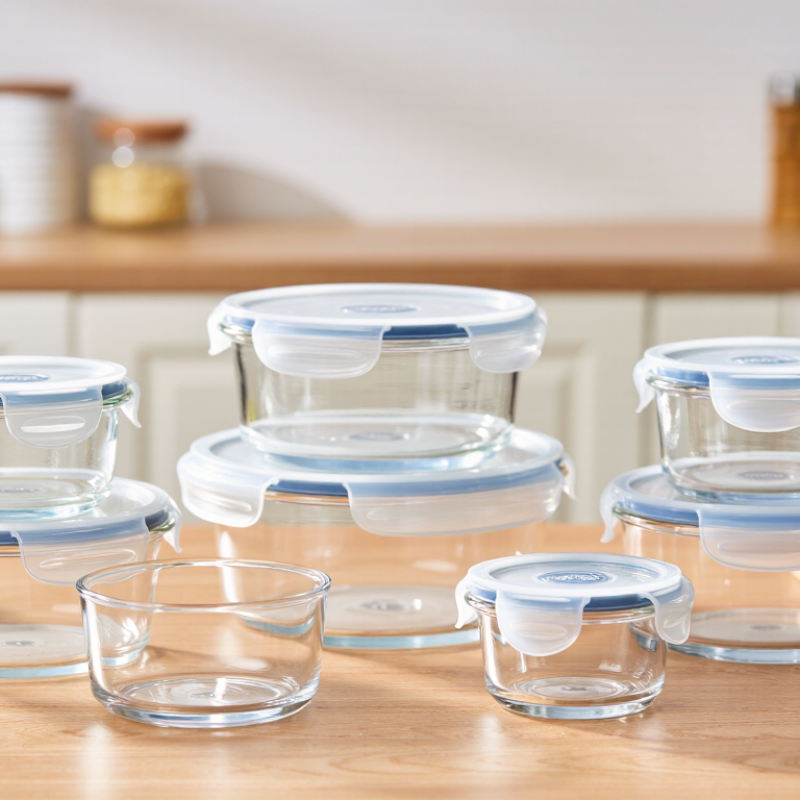
What Are the Best Glass Meal Storage Containers from China?

Types of Glass Meal Storage Containers Made in China

China-made glass meal storage containers usually fall into four practical types: borosilicate glass, tempered soda-lime glass, compartment boxes, and stackable nesting sets. Borosilicate handles rapid temperature changes better, making it suitable for freezer-to-oven routines. Tempered glass is often cheaper and heavier, but sudden thermal shock still requires caution.

Compartment containers separate rice, vegetables, and sauces without extra dishes. Some use two or three sections, while others include removable dividers. Nesting sets save cabinet space, especially in small kitchens. Clear glass also helps users check leftovers quickly. Small detail, big difference. Lids commonly use polypropylene with silicone seals, but lid materials and seal quality vary among Chinese factories.

According to Grand View Research, the global food storage container market was valued at about USD 5.6 billion in 2023, with continued growth expected through 2030. The report identifies convenience, reusable products, and organized storage as important demand factors. Meanwhile, Mordor Intelligence reports that glass packaging remains supported by recyclability and chemical stability. These figures describe broad markets, not every container made in China.

In sourcing work, I would check wall thickness, flatness, odor retention, seal compression, and repeated heating performance. A thicker base feels safer, but it can increase weight and shipping cost. “Oven-safe” should never replace a clear temperature range. That claim needs testing. Suppliers should provide food-contact documentation, migration testing, and instructions for thermal shock. One overlooked issue is condensation under the lid; it can weaken grip and encourage spills during transport.

Glass meal storage containers made in China are commonly offered in several practical shapes and capacity ranges. Rectangular containers are widely used for full meals, square containers suit compact portions, round containers work well for soups and salads, and divided containers help separate foods. The capacities shown represent common nominal sizes used for meal preparation, storage, and packed lunches.

Key Features to Compare Before Choosing a Container

When comparing glass meal storage containers from China, begin with material quality. Borosilicate glass tolerates sharper temperature changes than ordinary soda-lime glass. This matters when moving a container from a refrigerator into a hot oven. The U.S. Food and Drug Administration requires food-contact materials to meet safety standards, but buyers should still request test reports and traceability documents. A 2024 Grand View Research report estimated the global glass packaging market at more than USD 70 billion, showing strong demand for durable, recyclable packaging.

Check the lid before admiring the glass. A reliable lid should seal evenly, resist staining, and remain flexible after repeated washing. Silicone seals are useful, but their thickness and fit vary greatly between factories. I would compare at least 50 opening-and-closing cycles during sampling. That test is simple. It can reveal warping early. The International Organization for Standardization reports that dishwasher-related testing should consider repeated heat, detergent, and drying exposure. A container that survives one cycle proves very little.

Capacity markings, stackability, and weight also affect daily use. A 2023 report from Future Market Insights identified convenience and reusable food storage as major demand drivers. Choose rectangular shapes for shelves and rounded corners for easier cleaning. Inspect rim finishing closely; tiny chips can develop after impacts. I once preferred a lighter container, then regretted it when the lid loosened in a crowded lunch bag. The cheaper option was not truly cheaper. Ask for drop-test results, dimensional tolerances, and packaging details before placing a large order.

How to Evaluate Chinese Glass Container Manufacturers

When comparing glass meal storage containers from China, evaluate the manufacturer before judging the product. Ask whether the factory uses borosilicate or soda-lime glass. The material affects heat resistance, weight, and breakage risk. Request recent test reports for thermal shock, food-contact safety, and lid durability. Check whether an independent laboratory issued them. A reliable supplier should explain production steps clearly. Vague answers deserve caution.

Inspect samples under strong light. Look for bubbles, sharp rims, uneven bases, and loose silicone seals. Test the container with hot water, then cooling water, under controlled conditions. Do not perform extreme tests casually. Review the factory’s quality plan, including incoming glass inspection and final packing checks. Ask for batch records and traceability. A polished showroom can still hide weak process control. One successful sample is not proof of stable production. This is where many buyers become overconfident.

Tips:

Visit the facility, physically or through a live video call. Watch workers inspect rims and install seals. Confirm carton design, drop-testing procedures, minimum order quantities, and replacement policies. Compare three samples from different production dates. Check whether measurements remain consistent. Communication matters too. A manufacturer that reports defects honestly may be more dependable than one promising perfection. No document replaces careful verification.

Safety, Durability, and Food Contact Standards

Choosing glass meal storage containers from China requires more than judging clarity or price. Safety begins with food-contact compliance. Ask for current test reports covering the glass, lid, seal, inks, and adhesives. Depending on the destination market, documents may reference China’s GB 4806 standards, EU food-contact rules, or United States FDA requirements. Reports should identify the exact material and product model. A generic certificate proves little.

Durability depends on design and handling. Borosilicate glass usually tolerates temperature changes better than ordinary soda-lime glass, but it is not unbreakable. Check for smooth rims, consistent wall thickness, secure lids, and silicone seals without strong odors. A container should move from refrigerator to oven only when the instructions allow it. Avoid sudden thermal shock. I would not trust a perfect-looking box alone. Factory audits, batch records, and independent laboratory testing provide stronger evidence, although none removes every risk.

Tips: Request samples from the intended production batch. Wash them repeatedly before checking odors, stains, lid fit, and seal performance. Fill one with hot food, cool it safely, and inspect for cracks or distortion. Do not microwave a sealed container. Keep lids away from oven heat. Ask whether replacement lids are available, because the glass may outlast the closure. Small details matter.

Buying Guide for Selecting the Best Glass Meal Containers

When choosing glass meal storage containers from China, start with the glass type. Borosilicate glass usually handles temperature changes better than ordinary soda-lime glass. This matters when moving a container from a refrigerator to a warm oven. Check the stated temperature range, not just the phrase “heat resistant.” Ask for test reports and food-contact documentation from the supplier.

Practical design matters every day. Choose straight-sided containers for easier cleaning and stacking. A 700-milliliter size suits lunch, while smaller units work well for sauces or fruit. Inspect the lid seal closely. It should close evenly, without forcing one corner. Silicone seals should be removable for washing, although tiny grooves can trap moisture. I once overlooked this detail, and the lid developed an unpleasant smell after several weeks.

Before ordering, request samples from the actual production line. Test them with soup, rice, and oily food. Turn each container upside down for several minutes. Check for leaks, sharp edges, cloudy glass, and warped lids. Ask whether the glass is tempered, borosilicate, or standard glass, because these terms are not interchangeable. Confirm carton protection, drop-testing procedures, replacement policies, and batch inspection records. A low price can hide thinner walls or inconsistent lids. Still, thicker glass is not automatically better; it may add weight and increase shipping costs. Supplier communication can also be imperfect, so record every specification in writing.

FAQS

Which glass type is better for meal storage?

Borosilicate glass usually handles temperature changes better than ordinary soda-lime glass. Check the stated temperature range. Do not trust “heat resistant” alone. Ask for thermal shock reports before ordering.

How can I check lid quality?

Close the lid from every corner and check for even contact. A good seal should resist leaks and staining. Silicone seals should remain flexible after repeated washing. Test at least 50 opening-and-closing cycles.

What sample tests should buyers perform?

Use soup, rice, and oily food in the samples. Turn each container upside down for several minutes. Check for leaks, cloudy glass, sharp rims, and loose seals. One successful sample proves little.

How should manufacturers be evaluated?

Ask for production records, safety documents, and batch traceability. Compare samples from different production dates. Watch workers inspect rims and install seals during a factory visit or live video call. Vague answers deserve caution.

What container sizes are practical for daily meals?

A 700-milliliter container often suits a standard lunch. Smaller containers work well for sauces, fruit, or side dishes. Capacity markings should be clear and accurate. My preference may not match yours.

Which shapes are easiest to stack and clean?

Straight-sided rectangular containers usually fit shelves efficiently. Rounded corners make food residue easier to remove. Tiny lid grooves can trap moisture. That detail is easy to overlook.

What packaging details should be confirmed?

Ask about carton protection, internal padding, and drop-testing procedures. Confirm replacement policies for damaged items. Inspect the rim carefully, because tiny chips can grow after impacts. Cheap packaging can become expensive later.

Is thicker glass always a better choice?

Not necessarily. Thicker glass may resist some impacts, but it also adds weight and shipping cost. Compare wall thickness, breakage results, and actual daily handling. I once chose a lighter container and regretted its loose lid.

Conclusion

China offers a wide range of glass meal storage containers, including oven-safe dishes, stackable sets, compartment trays, and containers with leak-resistant lids. When comparing options, consider glass type, heat resistance, capacity, shape, lid design, seal quality, ease of cleaning, and compatibility with ovens, microwaves, freezers, and dishwashers. Transparent glass makes food identification easy, while nesting designs can help save kitchen space.

To evaluate Chinese manufacturers, buyers should review production capabilities, quality-control procedures, material traceability, packaging standards, and experience with international orders. Safety and durability are especially important, so confirm that the containers are made from food-contact-safe glass and that testing covers thermal shock, chemical migration, sealing performance, and repeated use. A practical buying decision should balance product specifications, certifications, sample quality, customization needs, order quantities, lead times, and after-sales communication. By carefully comparing these factors, purchasers can select reliable glass meal storage containers suited to household, catering, or retail requirements.

Oliver

Oliver

Oliver is a seasoned marketing professional with a wealth of expertise in driving brand awareness and engagement. With a deep understanding of our company's product offerings, he consistently delivers high-quality content that enriches our professional blog. His insights not only shed light on......