
Choosing glass pantry storage containers is less about creating a picture-perfect shelf and more about making everyday cooking easier. A jar should fit your shelf, open comfortably, and keep dry ingredients protected from kitchen moisture. Measure the depth and height first. Then consider what you actually store: a wide opening suits oats or flour, while a smaller jar may work better for seeds and spices. Clear glass makes contents easy to spot, but labels still help when several ingredients look alike.
Professional organizer Marie Kondo is known for asking, “Does it spark joy?” For pantry storage, a more practical version might be: “Will I use this easily?” That question matters. A heavy container can be awkward on a high shelf, and a beautiful lid is not useful if it seals poorly or is difficult to clean. Check that lids fit securely, the opening accommodates a measuring scoop, and the container’s shape makes good use of limited space. Square-sided designs can line up neatly; round jars may be easier to wash. Neither shape is perfect for every pantry.
Glass has real strengths, including visibility and easy cleaning, but it can chip or break if dropped. Think about who uses the pantry and where the containers will sit. Start with a few sizes, test them with your usual ingredients, and adjust as needed. A matching set looks tidy. It may not be the most useful set.
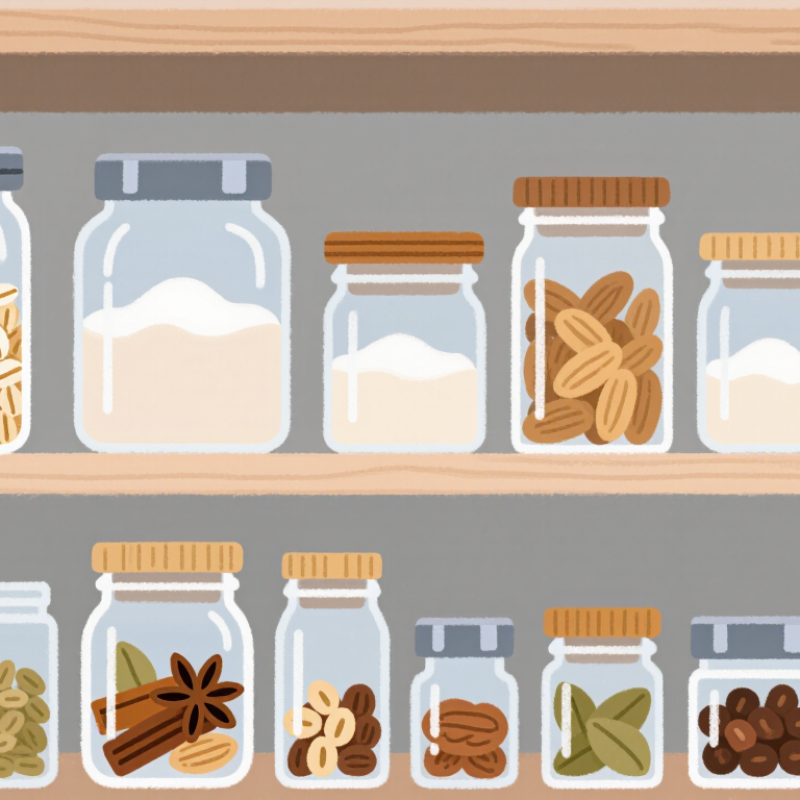
Glass pantry containers generally fall into a few useful types. Straight-sided canisters with removable lids suit flour, oats, and pasta; their wide openings make scooping easier. Screw-top jars work well for smaller quantities, spices, seeds, or snacks. For better resistance to moisture, choose jars with silicone-gasket lids or clamp closures. They can help protect dry goods, but the seal still needs regular cleaning.
Stackable, rectangular glass containers make efficient use of shelf space and keep contents visible. They are handy in narrow cupboards, though lids and shapes are not always interchangeable. One trade-off is easy to miss: a heavy glass canister may be awkward to lift when full. The U.S. EPA’s 2018 Advancing Sustainable Materials Management report recorded about 3.1 million tons of glass containers and packaging recycled. That figure describes U.S. packaging overall, not pantry-container durability or recyclability by itself.
Tips: Match the opening to how you use the food. A wide mouth suits a measuring cup; a narrow jar suits small portions. Check that the lid closes evenly, and leave a little headroom for easy handling. Label the container if its contents are hard to distinguish.
How to Choose the Best Glass Pantry Storage Containers
Assess Your Pantry Space and Storage Needs
Before choosing glass pantry containers, measure the shelves, including their depth and clearance beneath each shelf. A container that fits the width may still be too tall to remove easily. Leave room for your hand and for lids. Measure twice. Check whether your shelves are fixed or adjustable, and note awkward corners that could make wide jars hard to reach.
Next, consider what you actually store and how quickly you use it. A large container may suit a household that buys flour in bulk, but it can waste space if you only bake occasionally. Group similar staples, such as grains or snacks, and estimate the amount each group needs. Square-sided containers can make better use of shelf space, while smaller jars help keep spices and seeds visible. Glass is sturdy, but full containers can be heavy. Plan to store heavier items on lower shelves.
Tips: Use a tape measure and a few empty boxes to test the layout before buying. Keep everyday ingredients near the front. One easy detail to miss is lid height; it can prevent a container from sliding beneath a shelf. Be realistic about cleaning, too—some shapes are simply harder to reach inside.
When choosing glass pantry containers, check the glass type and thickness, not just its shine. Borosilicate glass handles temperature changes better than ordinary soda-lime glass, but it still needs careful handling. For dry foods, sturdy soda-lime glass may be perfectly practical. Look for even walls, smooth rims, and no visible chips. A heavy jar can feel reassuring, yet it may be awkward to lift from a crowded shelf.
Lid material affects daily use. Plastic lids are light and easy to open, while stainless steel lids can feel more durable. Silicone gaskets often improve the seal, but they need to sit flat and stay clean. Press gently around the rim; a loose corner may let air or pantry moisture in. A strong seal matters most for items like crackers or ground spices. It is less critical for a bag of rice used every week. I once focused too much on airtight claims and overlooked how difficult a lid was to remove with wet hands.
Tips: Bring a small sample of your usual dry goods when comparing sizes. Check that the lid closes without forcing it, and test the seal with a little water before storing food. Keep glass away from shelf edges.
Compare glass quality, lid materials, and seal performance
The chart compares typical linear thermal expansion coefficients in millionths per kelvin (×10⁻⁶/K). Lower expansion generally means less dimensional change as temperature shifts; borosilicate glass typically expands less than soda-lime glass. The plotted values for polypropylene and silicone are representative midpoints of the approximate ranges shown. A container’s seal cannot be judged from material alone: check the gasket fit, lid design, and closure.
Choosing useful glass pantry containers starts with measuring the shelf, not guessing from a product photo. Check the shelf depth, height, and door clearance with a tape measure. A tall, narrow jar can hold spaghetti neatly, while a low, wide container suits oats or flour. For everyday ingredients, capacities around 500 milliliters to one liter are often easier to lift and refill than oversized jars. Small details matter. Leave room for your hand to grip each container.
Shape affects how much pantry space you can actually use. Straight-sided squares or rectangles usually sit close together, with fewer awkward gaps than round jars. Round containers can still work well for scooping, especially when stored on a turntable. Match the opening to the ingredient: a wide mouth helps with measuring cups, while a narrower one can keep small shelves less crowded. I have found that a container that looks tidy but is hard to scoop from becomes annoying quickly.
For stackable designs, check that the lids sit securely and that container footprints match. A stable, flat lid makes stacking easier, but avoid building a tall tower you must dismantle every time you need rice. Not always. Keep frequently used items at eye level, and place heavier glass lower on the shelf. Before buying a full set, try a few sizes with the foods you store most. The fit may be imperfect, and that is useful to learn before filling an entire cupboard.
Glass pantry containers are useful only when their safety details match your routine. Check that the glass is intended for food storage, and inspect rims for chips or hairline cracks before buying. Small details matter. A damaged edge can worsen during handling. Do not assume every container is safe for ovens, microwaves, or freezers; follow its care instructions, especially when temperatures change quickly. A warm jar placed on a cold stone counter may experience thermal shock.
Cleaning needs can be easy to overlook. Smooth glass walls usually rinse clean, but lids may have grooves that trap flour, oil, or crumbs. If a lid has a removable gasket, check whether it can be taken out and washed thoroughly. Some lids need handwashing, even when the container itself is dishwasher-safe. That extra step can become annoying when you store several staples.
Long-term value depends on more than the purchase price. Compare sturdy, replaceable lids with fragile parts that require replacing the whole container. Check whether jars stack securely and fit your shelves; a beautiful set that wastes cupboard space is less useful. Measure your shelf depth first. I would also consider weight: large glass jars can feel awkward when filled with rice or beans. Not always a deal-breaker, but worth testing with one container before committing to a full set.
| What to Check | Useful Details | What to Look For | Why It Matters |
|---|---|---|---|
| Glass type | Food-storage containers commonly use soda-lime glass or borosilicate glass. Borosilicate glass generally tolerates temperature changes better, but neither type is immune to thermal shock or breakage. | Choose containers clearly identified for food storage. If you plan to move them between temperature environments, check the stated temperature limits and use instructions. | Glass type and intended use affect how a container should be handled, especially when heating or chilling food. |
| Food-contact safety | Glass is nonporous and generally does not absorb food odors or stains. Lids and seals may be made from plastic, silicone, or other materials, so safety and care instructions can differ by component. | Check that the container is intended for food contact. For lids and seals, review the material information and any stated restrictions. | The lid and gasket touch food too, and may have different heat or cleaning limits from the glass base. |
| Temperature changes | Rapid temperature changes can cause glass to crack or shatter. A container taken from a refrigerator or freezer may not be suitable for immediate use in a hot oven unless its instructions explicitly allow it. | Follow the maker’s temperature limits. Avoid placing hot glass on a cold or wet surface, and do not pour boiling liquid into a chilled container unless permitted. | Careful temperature handling reduces the risk of thermal-shock damage and injury. |
| Oven and microwave use | Some glass bases are labeled for oven or microwave use; lids are often not. Metal parts must not be used in a microwave. | Look for explicit appliance-use instructions for each part. Remove the lid unless it is specifically marked as safe for that use. | A container being made of glass does not automatically mean its lid, seal, or entire assembly is appliance-safe. |
| Dishwasher cleaning | Many glass containers are dishwasher-safe, but lid and gasket instructions vary. Repeated high heat can affect some plastics or seals. | Confirm whether the glass base, lid, and seal are dishwasher-safe, and check any rack-placement guidance. Wash parts by hand when instructions require it. | Following component-specific care directions helps preserve fit, clarity, and sealing performance. |
| Seal and leak resistance | A gasket or locking lid can help limit spills and keep dry foods protected from moisture, but a seal does not necessarily make a container fully leakproof or airtight. | Check the product’s stated sealing performance and inspect seals for food residue, stretching, cracks, or a loose fit. | A dependable seal helps with storage, while realistic expectations prevent spills during transport. |
| Size and visibility | Clear glass makes contents easy to see. Wide openings are generally easier to fill, scoop from, and clean than narrow openings. | Choose capacities that suit your usual pantry staples, and check opening width, container height, and shelf clearance. | The right shape can reduce spills and make everyday access easier. |
| Stacking and storage | Some containers are designed to nest or stack securely; others may need more shelf space. Glass is heavier than many plastic alternatives. | Check whether bases and lids stack stably, and consider the weight of filled containers and the strength of your shelves. | Practical stacking can improve pantry organization, while weight and stability affect safe handling. |
| Durability and replacement parts | Glass resists staining and odor retention, but can chip or break if dropped or struck. Lids and seals may wear out before the glass base. | Look for sturdy construction, clearly available care guidance, and replaceable lids or seals where possible. Check rims for chips before use. | Replaceable components can extend the useful life of a container set and reduce unnecessary replacement. |
| Long-term value | Value depends on how often the containers are used, how well they fit your pantry, and whether lids and seals remain functional—not just the initial purchase price. | Compare useful capacity, cleaning effort, storage efficiency, warranty terms, and the availability of replacement components. | A container that suits your routine and is easy to maintain may offer better value over time. |
Measure shelf depth, height, and door clearance with a tape measure. Leave space to grip each jar.
Straight-sided square or rectangular jars usually leave fewer gaps. Round jars can work well on a turntable.
Containers around 500 milliliters to one liter are often easier to lift and refill. Larger jars may feel heavy when full.
A wide mouth makes scooping flour or oats with a measuring cup easier. Narrow openings can suit small shelves.
Look for flat, secure lids and matching footprints. Avoid a tall stack you must dismantle for rice.
Keep heavier containers on lower shelves, and frequently used foods near eye level. Not always convenient, but safer to reach.
Choose glass intended for food storage and inspect the rim for chips or fine cracks. Follow care instructions for heating or freezing.
No. Lid grooves can trap flour or crumbs, and removable gaskets need thorough washing. Check each part’s instructions.
Check whether lids can be replaced and whether the jars fit your shelves. Try one filled container first; I sometimes underestimate its weight.
Choosing the best glass pantry storage containers starts with understanding the different styles available, such as jars for dry goods, canisters for frequently used ingredients, and modular sets for a coordinated pantry. Consider your available shelf and drawer space, the foods you plan to store, and how often you need to access them. Clear glass makes it easy to see contents, while a range of sizes and shapes can help accommodate everything from small amounts of spices to larger quantities of grains.
Compare glass thickness and durability, along with lid materials and how securely each lid seals. A reliable seal can help keep food fresh and limit moisture exposure. Stackable designs may save space, but should remain stable and easy to handle. Before buying, check whether the containers and lids are simple to clean and suitable for your intended use. Balancing safety, convenience, durability, and cost will help you choose storage that works well over time.
